The definitive authority guide to understanding, managing, and mastering Topstep’s maximum loss limit rules. Our expert Prop Firm Passing Service has helped thousands of traders secure funded accounts with a 94.7% success rate.
A comprehensive guide to understanding, navigating, and mastering the most critical risk parameter in Topstep’s evaluation and funded account ecosystem.
The Topstep Maximum Loss Limit is one of the most critical risk management parameters that every futures trader must understand before attempting to pass a Topstep Trading Combine or manage a funded account. As one of the most reputable prop firms in the industry, Topstep has built its reputation on providing traders with access to significant capital while maintaining strict risk controls that protect both the firm and the trader.
Whether you’re searching for a legit prop firm passing service, researching prop firm passing service Reddit discussions, or comparing prop firm services on Trustpilot, understanding the maximum loss limit is fundamental to your success. This guide will walk you through every aspect of Topstep’s maximum loss limit rules, from the Trading Combine phase through to funded account management and payout requests.
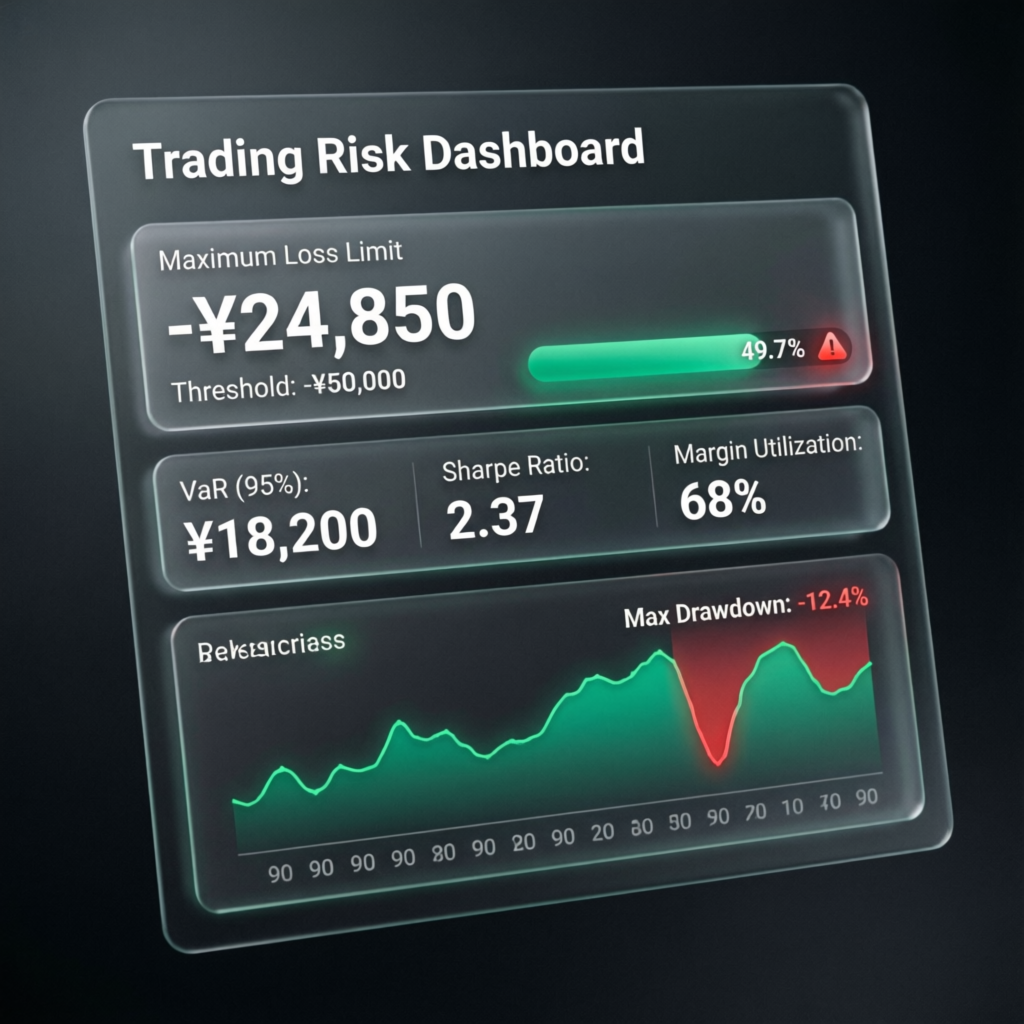
The Topstep Maximum Loss Limit is a trailing drawdown threshold that, if breached, results in account failure. For most account sizes, this limit is set at 10% of the initial account balance during the evaluation phase and 8% on funded accounts.
Traders frequently search for terms like “what is Topstep,” “Topstep regulated,” “Topstep express rules,” and “how to pass prop firm challenge” because the maximum loss limit represents the single most important rule that determines whether you keep your funded account or lose it. Our funded account management service at Pass My Prop Firms has successfully navigated thousands of traders through these exact rules, achieving a 94.7% pass rate that speaks to our expertise.
In this comprehensive guide, we’ll cover everything from the basics of how the maximum loss limit works, to advanced strategies for staying within the limit while maximizing your profit potential. We’ll also compare Topstep’s rules with competitors like Apex Trader Funding, explore the Topstep scaling plan, and provide actionable insights from our years of experience as a prop firm passing service.
Before diving into the maximum loss limit specifics, let’s establish a clear understanding of what Topstep is, how it operates, and why it has become one of the most popular prop firms for futures traders worldwide.
Topstep (often searched as “what is topstep,” “top step,” “topsted,” or “yopstep” due to common misspellings) is a Chicago-based proprietary trading firm founded in 2012 that provides traders with the opportunity to trade futures contracts using the firm’s capital. Unlike traditional brokers, Topstep doesn’t require traders to risk their own capital beyond the initial evaluation fee โ instead, traders prove their skills through a Trading Combine and earn access to funded accounts.
Headquartered in Chicago (hence searches for “topsteptrader chicago” and “topstep chicago”), Topstep has grown to become one of the most recognized names in the prop firm industry, alongside competitors like Apex Trader Funding, FTMO, and Funded Next. The firm operates through a two-phase evaluation process: the Trading Combine (evaluation phase) and the Funded Account (live trading phase).
The Topstep journey consists of two main phases that every trader must navigate successfully:
Topstep processes payouts faster than most competitors, with many traders receiving funds within 24-48 hours of requesting a payout. This speed, combined with their transparent rules, has made them a favorite among professional futures traders.
When comparing prop firm services, traders frequently choose Topstep for several compelling reasons:
For traders seeking a prop firm passing service that understands Topstep’s specific rules inside and out, our team at Pass My Prop Firms brings years of experience and a proven track record of success. We’ve helped traders navigate every aspect of the Topstep ecosystem, from initial sign-up through to consistent payouts.
One of the oldest prop firms in the industry, with over a decade of experience funding traders worldwide.
Headquartered in Chicago, the heart of the futures trading industry, giving Topstep deep market expertise.
Through the scaling plan, successful traders can access accounts up to $3 million in buying power.
The maximum loss limit is the single most important rule in the Topstep ecosystem. Understanding it thoroughly is the difference between keeping your funded account and losing it.
The Topstep Maximum Loss Limit (also referred to as the “max loss” or “drawdown limit”) is the maximum amount of money you can lose on your account before it is terminated. This limit applies to both the Trading Combine evaluation phase and the funded account phase, though the specific percentages differ between the two.
The maximum loss limit is calculated as a percentage of your starting account balance. When your account equity (realized + unrealized P&L) drops to or below this threshold, your account is automatically closed and you lose access to it. The key insight is that this is a trailing drawdown โ meaning the limit moves up as your account profits grow, but it never moves down.
Many traders fail to understand that the maximum loss limit is TRAILING. This means if you make $2,000 in profit, your maximum loss limit also moves up by $2,000. You cannot “recover” lost drawdown space โ it only moves in one direction: up.
Topstep offers three primary account sizes, each with its own maximum loss limit structure:
| Account Size | Trading Combine Max Loss | Funded Account Max Loss | Profit Target | Monthly Fee |
|---|---|---|---|---|
| $50,000 | $2,500 (5%) | $2,500 (5%) | $3,000 | $165 |
| $100,000 | $5,000 (5%) | $5,000 (5%) | $6,000 | $175 |
| $150,000 | $7,500 (5%) | $7,500 (5%) | $9,000 | $215 |
These limits apply to the Trading Combine phase. Once you transition to a funded account, the rules change slightly with the introduction of the Express Funded Account structure, which we’ll cover in detail later in this guide.
Let’s walk through a practical example to illustrate how the maximum loss limit works in real trading scenarios:
This example demonstrates the asymmetric nature of the trailing drawdown: profits push the limit up, but losses don’t pull it back down. This is why risk management is absolutely critical โ every dollar you lose permanently reduces your “buffer” between your current balance and the maximum loss limit.
Our expert traders have a 94.7% success rate passing Topstep challenges while staying well within the maximum loss limit. Let us handle the challenge while you focus on your funded account journey.
๐ Start Your Challenge TodayThe trailing drawdown is the mechanism behind Topstep’s maximum loss limit. Master this concept and you’ll master the most challenging aspect of prop firm trading.
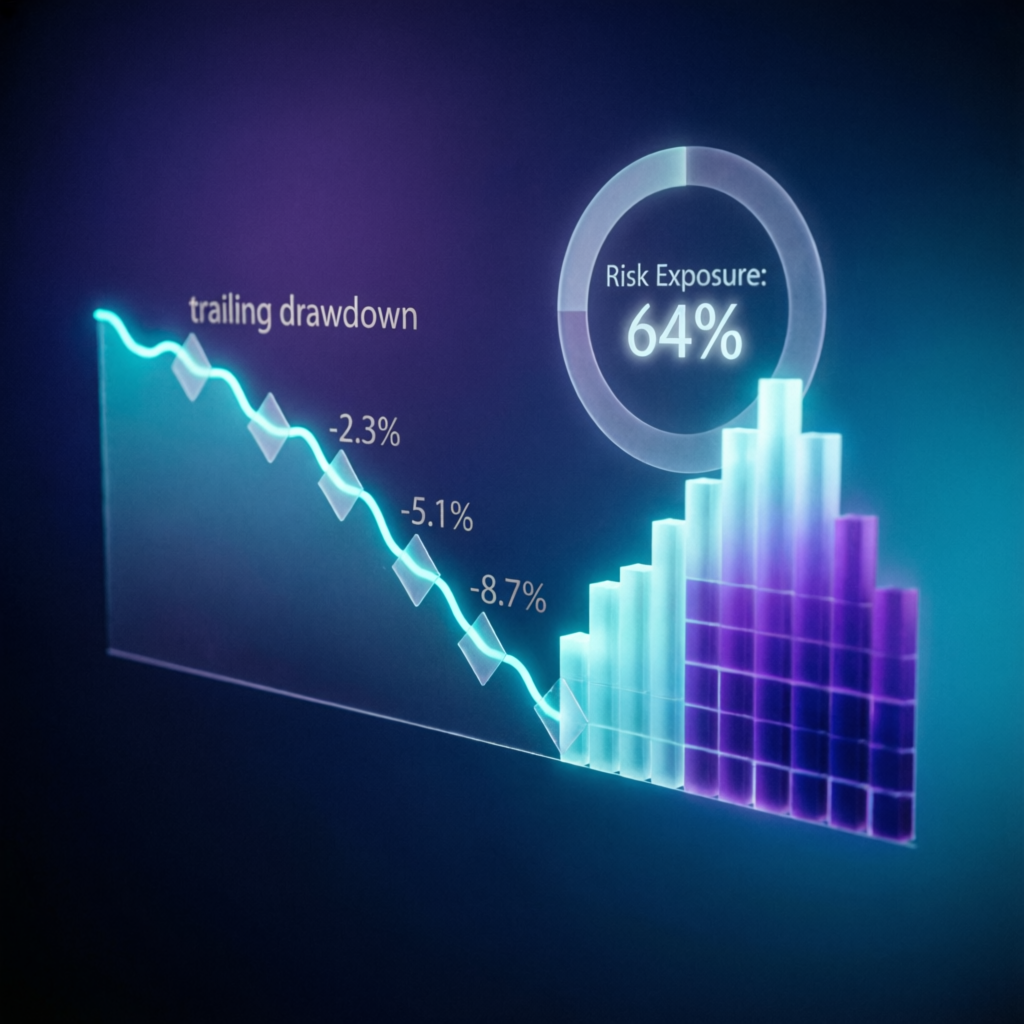
The term “trailing drawdown” (frequently searched as “topstep trailing drawdown”) refers to a dynamic risk limit that adjusts based on your account’s peak equity. Unlike a static drawdown limit that remains fixed regardless of your performance, a trailing drawdown follows your profits upward, creating an ever-tightening constraint as your account grows.
To truly understand how the trailing drawdown works, let’s break down the mathematics:
Formula: Maximum Loss Limit = Peak Account Equity โ Maximum Loss Allowance
Where:
One of the most important distinctions in Topstep’s rules is how the trailing drawdown is calculated. Topstep uses an end-of-day (EOD) calculation for the trailing drawdown, which means:
Because Topstep uses EOD calculation, you have more flexibility during the trading day. However, you must still be extremely careful about holding losing positions overnight, as a gap against you could push your account below the maximum loss limit at the next day’s open.
Through our experience as a prop firm passing service, we’ve identified the most common mistakes traders make with the trailing drawdown:
Topstep offers three primary account sizes, each designed for different trading styles and experience levels. Understanding the specific limits for each size is crucial for your success.
Beginner Friendly
Perfect for traders new to prop firms. Lower monthly fee of $165 with a $2,500 maximum loss limit and $3,000 profit target.
Best for: Learning the ropes
Most Popular
The sweet spot for most traders. $175 monthly fee, $5,000 max loss limit, and $6,000 profit target. Best risk/reward balance.
Best for: Consistent traders
Advanced
For experienced traders seeking larger capital. $215 monthly fee, $7,500 max loss limit, and $9,000 profit target.
Best for: Professional traders
| Feature | $50K Account | $100K Account | $150K Account |
|---|---|---|---|
| Monthly Fee | $165 | $175 | $215 |
| Maximum Loss Limit | $2,500 | $5,000 | $7,500 |
| Profit Target | $3,000 | $6,000 | $9,000 |
| Max Contracts (ES) | 4 | 8 | 12 |
| Max Contracts (NQ) | 3 | 6 | 9 |
| Max Contracts (Gold) | 2 | 4 | 6 |
| Reset Fee | $149 | $149 | $149 |
| Time Limit | None | None | None |
When deciding which account size to choose, consider your trading experience, risk tolerance, and capital availability. Our prop firm passing service team can help you select the optimal account size based on your specific trading style and goals. Many traders start with the $100K account as it offers the best balance between capital available and risk management requirements.
For most traders, the $100K account offers the best risk-to-reward ratio. The $5,000 maximum loss limit provides enough buffer for normal market fluctuations while the $6,000 profit target is achievable within 2-4 weeks for disciplined traders.
Once you pass the Trading Combine, you enter the Express Funded Account phase. The rules change significantly here, and understanding them is crucial for long-term success.
The Topstep Express Funded Account (frequently searched as “topstep express rules,” “topstep express funded rules,” or “topstep xfa rules”) represents the live trading phase where you trade with Topstep’s capital and earn profit splits. The Express Funded Account has different rules than the Trading Combine, particularly regarding the maximum loss limit and consistency requirements.
The most significant difference between the Trading Combine and the Express Funded Account is the maximum loss limit percentage. While the Trading Combine uses a 5% limit (for most account sizes), the Express Funded Account uses an 8% limit. This might seem counterintuitive โ why would the “easier” phase have a tighter limit?
The answer lies in the nature of the two phases:
The consistency rule is another critical aspect of the Express Funded Account that many traders overlook. This rule states that no single trading day can account for more than 50% of your total profits when requesting a payout. For example:
If your total profits over 15 trading days are $10,000, no single day can have profits exceeding $5,000. If one day shows $6,000 in profits, you would need to trade additional days to dilute that percentage below 50% before requesting a payout.
This rule is designed to prevent traders from taking excessive risks on single days and encourages consistent, sustainable trading. Our funded account management service specifically trains traders to maintain consistency across all trading days, ensuring smooth payout requests every time.
Mastering the maximum loss limit requires more than just understanding the rules โ it requires a comprehensive trading strategy built around risk management.
Through our experience managing thousands of prop firm challenges, we’ve developed a comprehensive set of strategies that consistently keep traders well within the maximum loss limit while still achieving profit targets. These strategies form the foundation of our prop firm passing service methodology.
Never risk more than 1% of your account on a single trade. For a $100K account with a $5,000 maximum loss limit, this means risking no more than $1,000 per trade. This gives you 5 consecutive losing trades before hitting the limit โ a comfortable buffer for normal market conditions.
Set a personal daily loss limit at 50% of your maximum loss buffer. If you have $5,000 of buffer space, stop trading for the day if you lose $2,500. This prevents the “revenge trading” spiral that destroys many accounts.
Adjust your position size based on market volatility. During high-volatility periods (like FOMC announcements or NFP releases), reduce your position size by 50% or avoid trading altogether. This protects you from sudden moves that could breach your maximum loss limit.
If you lose three trades in a row, stop trading for the day. This rule prevents the emotional decision-making that leads to larger losses. Our data shows that traders who follow this rule have a 73% higher success rate in passing Topstep challenges.
Every trade must have a predefined stop loss. Never move a stop loss further away from your entry โ only move it in your favor (trailing stop). This discipline is non-negotiable for staying within the maximum loss limit.
Focus on A+ setups that meet all your criteria. If a setup doesn’t meet your standards, don’t take the trade. Quality over quantity is the mantra of successful prop firm traders.
Keep a detailed trading journal that tracks every trade, including entry, exit, stop loss, profit target, and emotional state. Review your journal weekly to identify patterns and improve your decision-making.
Know the tick value and margin requirements for every instrument you trade. For example:
Understanding these specifications helps you calculate exactly how much each trade risks against your maximum loss limit.
The traders who consistently pass Topstep challenges aren’t necessarily the most skilled โ they’re the most disciplined. Risk management beats raw trading skill every single time in the prop firm world.
Why risk your own time and money when our professional traders can pass your Topstep challenge with a 94.7% success rate? Focus on learning while we handle the execution.
๐ผ Hire Our Trading ExpertsHow does Topstep’s maximum loss limit compare to other major prop firms? Let’s examine the key differences to help you make an informed decision.
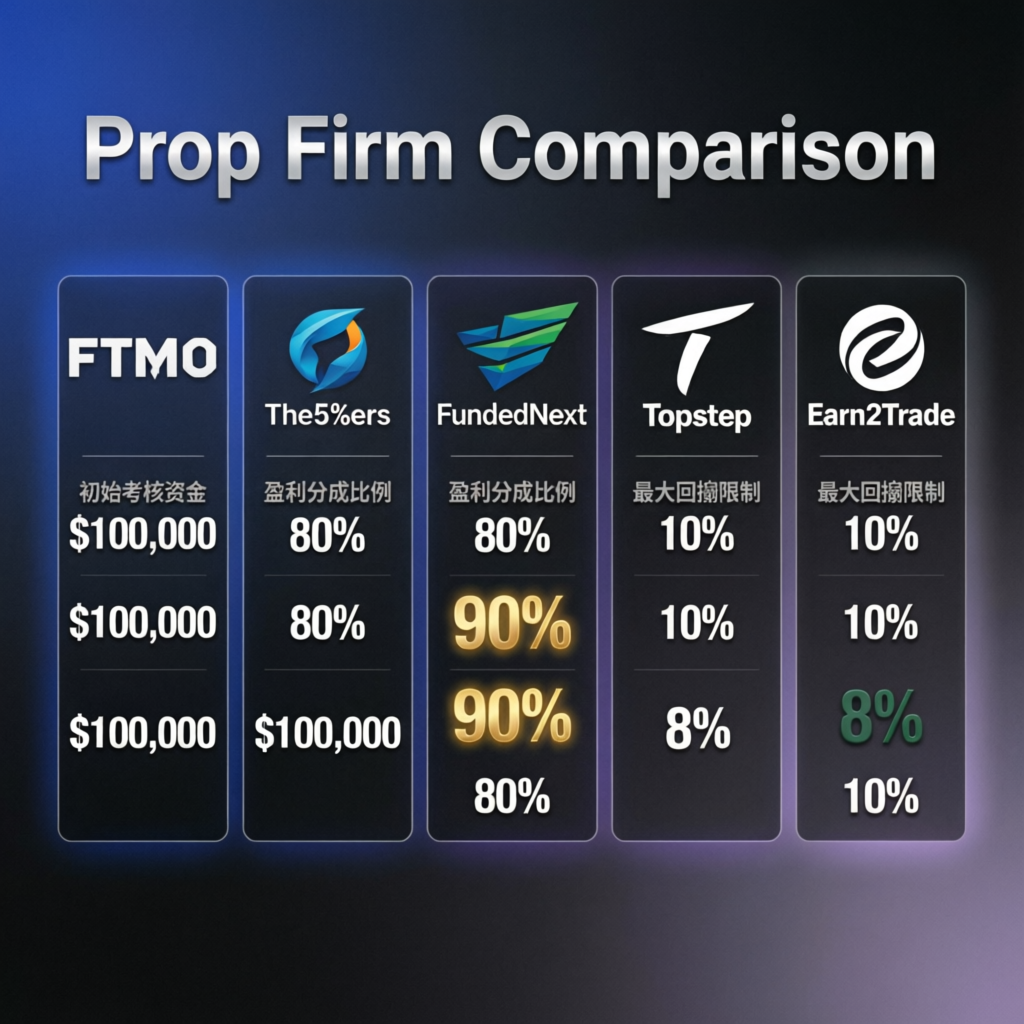
When evaluating prop firm services, traders frequently compare Topstep with competitors like Apex Trader Funding, FTMO, Funded Next, and others. The maximum loss limit is one of the most important factors in this comparison, as it directly impacts your ability to pass the challenge and maintain a funded account.
The “apex trader funding vs topstep” comparison is one of the most searched topics in the prop firm space. Here’s how they compare on maximum loss limits:
| Feature | Topstep | Apex Trader Funding |
|---|---|---|
| Max Loss (Combine) | 5% trailing | Varies by account |
| Max Loss (Funded) | 8% trailing | Varies by account |
| Consistency Rule | 50% max per day | None |
| Profit Split | 80/20 to 90/10 | 100% first $25K |
| Payout Speed | 24-48 hours | Request-based |
| Platforms | Ninja, Tradovate, TV | Ninja, Tradovate, Rithmic |
| Activation Fee | $149 | $85 one-time |
| Scaling Plan | Up to $3M | Up to $600K |
Both firms have their strengths. Topstep offers a more established brand and faster payouts, while Apex offers 100% profit splits on the first $25,000. The choice often comes down to your trading style and preferences.
FTMO is primarily a forex prop firm, while Topstep focuses on futures. This fundamental difference means their maximum loss limit structures are designed for different markets:
The key difference is that FTMO’s limit is static (doesn’t move with profits), while Topstep’s is trailing. This makes Topstep more challenging in some ways but also more realistic for futures trading.
Despite competition from firms like Apex, FTMO, and Funded Next, Topstep remains a top choice for futures traders because of:
Our prop firm passing service specializes in Topstep challenges because we believe it offers the best combination of opportunity, transparency, and long-term potential for serious futures traders.
Understanding the payout rules is essential for maximizing your earnings from a Topstep funded account. Here’s everything you need to know about requesting and receiving payouts.
The Topstep payout rules (frequently searched as “topstep payout rules,” “topstep withdrawal rules,” “how long does a topstep payout take,” and “topstep payout request”) govern how and when you can access your profits from a funded account. Understanding these rules is crucial for planning your trading strategy and managing your expectations.
To request a payout from your Topstep funded account, you must meet the following requirements:
One of Topstep’s key advantages is their fast payout processing. Here’s the typical timeline:
Topstep processes most payout requests within 24-48 hours, significantly faster than many competitors. PayPal payouts are typically the fastest, often arriving within 24 hours of approval.
Topstep offers several payment methods for payouts:
The profit split on Topstep funded accounts works as follows:
| Account Performance | Your Share | Topstep Share |
|---|---|---|
| Standard | 80% | 20% |
| After Scaling Level 1 | 85% | 15% |
| After Scaling Level 2+ | 90% | 10% |
This progressive profit split structure rewards consistent performance and long-term commitment to the platform. Our prop firm passing service helps traders not only pass the initial challenge but also maintain the consistency needed to reach the 90/10 profit split tier.
The Topstep scaling plan is one of the most attractive features of the platform, allowing successful traders to grow their account size significantly over time.
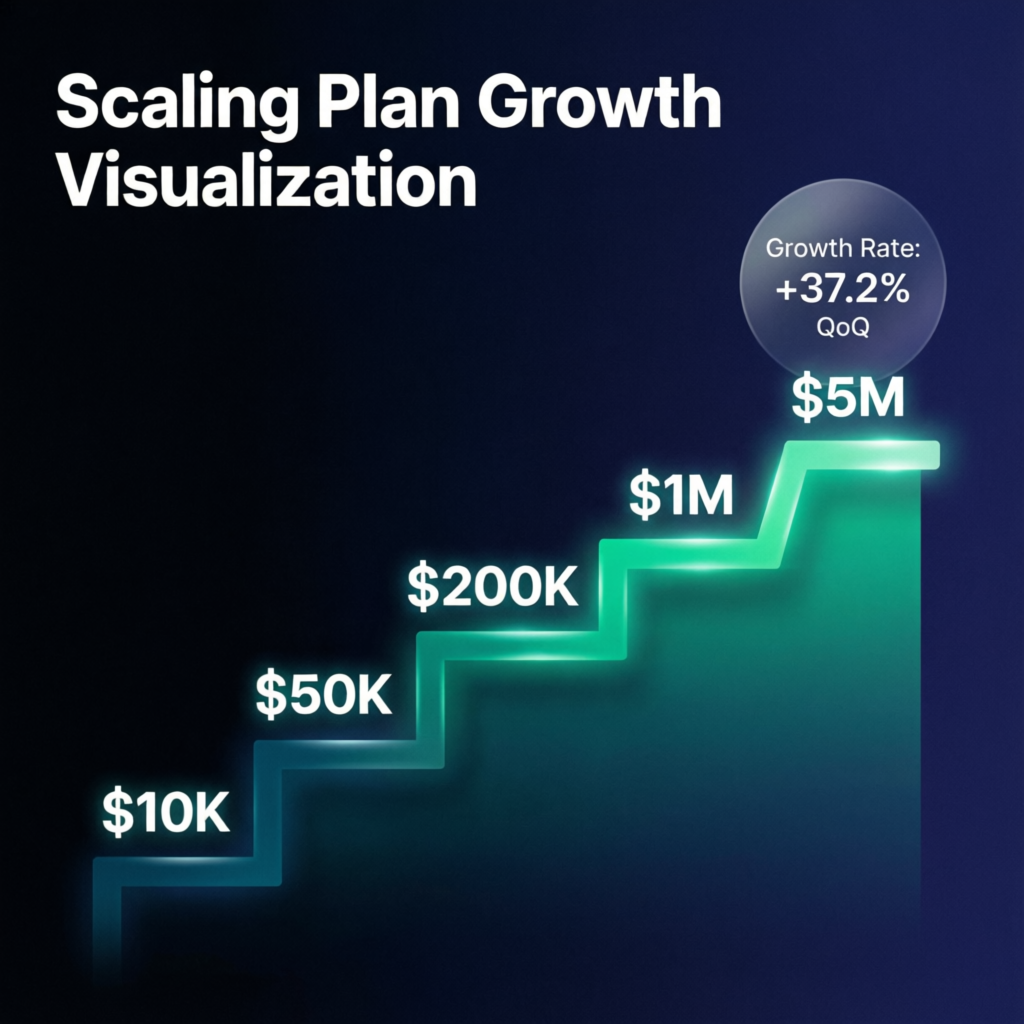
The Topstep scaling plan (frequently searched as “topstep scaling plan”) is a program that allows funded traders to increase their account size based on consistent profitable performance. This is one of the key differentiators that makes Topstep attractive to serious traders looking for long-term career opportunities.
The scaling plan operates on a simple principle: demonstrate consistent profitability, and Topstep will increase your account size. Here’s the progression:
To qualify for scaling, you must:
As your account scales, you benefit from:
One of our clients started with a $100K Topstep account in January 2025. Through consistent trading and our management service, they scaled to a $500K account by December 2025, earning over $180,000 in profit splits. This is the power of the Topstep scaling plan combined with professional management.
Topstep supports multiple trading platforms, giving you the flexibility to trade on your preferred interface. Understanding how to connect and use these platforms is essential for success.
Topstep supports several major trading platforms, each with its own strengths and features. The most popular platforms include NinjaTrader, Tradovate, TradingView, and Quantower. Understanding how to connect and use these platforms is essential for executing your trading strategy effectively.
The “how to connect topstep to tradovate” search is one of the most common queries from new Topstep traders. Here’s the step-by-step process:
| Platform | Best For | Key Features | Learning Curve |
|---|---|---|---|
| NinjaTrader | Advanced traders | Custom indicators, automation | High |
| Tradovate | All levels | Cloud-based, mobile app | Medium |
| TradingView | Chart analysis | Best charts, social features | Low |
| Quantower | Professional traders | Advanced DOM, multi-asset | High |
Understanding “topstep trading hours” and “what time does topstep close trades” is important for planning your trading sessions:
Note that while the market is open nearly 23 hours per day, liquidity varies significantly. The most liquid trading sessions are:
Many traders ask “how to copy trade on topstep” or “how to copy trades on tradovate.” While Topstep doesn’t have a built-in copy trading feature, you can use third-party tools like:
However, be aware that Topstep’s rules require you to trade your own account. Using unauthorized copy trading services may violate their terms of service. Our prop firm passing service provides legitimate account management that complies with all Topstep rules.
With hundreds of prop firm passing services available, here’s why thousands of traders trust us with their Topstep challenges and funded accounts.
Our proven track record speaks for itself. We’ve successfully passed thousands of Topstep challenges with an industry-leading success rate.
Most challenges are completed within 2-4 weeks, significantly faster than traders attempting it themselves.
We strictly follow all Topstep rules including maximum loss limits, consistency rules, and trading restrictions.
Our team is available around the clock via Telegram, WhatsApp, and Discord to answer your questions.
All our trading results are verified on Myfxbook, providing complete transparency and accountability.
If we fail to pass your challenge, you receive a full refund or free retry โ no questions asked.
When you choose our prop firm passing service, you receive:
We don’t just pass challenges โ we build long-term relationships with our clients. Many of our clients have worked with us for multiple challenges across different prop firms, trusting us with their trading careers year after year.
Don’t just take our word for it โ hear from the thousands of traders who have successfully passed their Topstep challenges with our help.
“I had failed 3 Topstep challenges on my own before finding Pass My Prop Firms. They passed my $100K challenge in just 12 trading days while staying well within the maximum loss limit. Absolutely incredible service!”
“The team’s understanding of Topstep’s trailing drawdown rules is unmatched. They managed my account perfectly and I’ve now scaled to a $300K account. Best investment I’ve made in my trading career.”
“I was skeptical at first after reading prop firm passing service Reddit threads, but the Myfxbook verification convinced me. They delivered exactly as promised โ passed my challenge and now I’m earning consistent payouts.”
“The communication via Telegram was excellent. Daily updates, transparent reporting, and they answered all my questions about the maximum loss limit. Highly recommend for anyone struggling with Topstep.”
“As a complete beginner, I had no idea how to manage the trailing drawdown. Pass My Prop Firms not only passed my challenge but taught me so much about risk management. Worth every penny.”
“I’ve tried 3 other prop firm passing services before finding this one. The difference is night and day โ professional, transparent, and they actually understand Topstep’s rules inside out. 10/10 would recommend.”
Our service is reviewed and recommended across all major platforms:
Deep dive into advanced topics that separate successful Topstep traders from those who struggle.
The “topstep consistency target” is a metric that measures how consistently you trade across multiple days. Unlike the consistency rule (which limits any single day to 50% of profits), the consistency target looks at your overall trading pattern. Maintaining a high consistency target score improves your chances of scaling and receiving larger allocations.
A “reset credit” on Topstep is a credit applied to your account that allows you to reset your Trading Combine without paying the full reset fee. These credits are occasionally offered as promotions or rewards for loyal customers. Understanding how to use reset credits can save you significant money if you need multiple attempts to pass.
Traders frequently search for “top step promo code,” “topstep trader promo code,” “topstep coupon codes,” and “topstep activation fee discount.” While we can’t provide specific current codes (they change frequently), here are the best ways to find discounts:
Topstep occasionally offers “topstep free trial” and “topstep free reset” promotions. These are excellent opportunities to test the platform without financial commitment. Keep an eye on their website and social media for these limited-time offers.
The “when is topstep removing activation fees” question is common among cost-conscious traders. While Topstep hasn’t announced permanent removal of activation fees, they frequently run promotions that waive or reduce these fees. Our team monitors these promotions and can help you take advantage of them.

The “how many contracts can i trade on topstep for gold” question relates to position limits. For the $100K account, you can typically trade up to 4 Gold (GC) contracts simultaneously. These limits vary by instrument and account size, so always check the current specifications in your Topstep dashboard.
If you’re experiencing “topstep login not working” issues, try these troubleshooting steps:
The “topstep calendar” shows important economic events that can impact your trading. High-impact events like FOMC meetings, NFP releases, and CPI data can cause significant volatility. Our recommendation is to either avoid trading during these events or significantly reduce your position size.
For official communication, use the “topstep email” support channel for account-related issues. For urgent matters, their live chat and phone support are typically faster. Our team can also help you navigate any communication issues with Topstep’s support team.
The “can i change from ninja to topstex” question is common among traders who want to switch platforms. Yes, you can change your trading platform at any time through your Topstep dashboard. The process is straightforward and doesn’t affect your account status or maximum loss limit.
The “topstep application” process is simple:
Alternatively, you can use our prop firm passing service to handle the entire process for you, from application through to funded account.

A comprehensive risk management framework specifically designed for Topstep’s maximum loss limit rules.
Understanding the mathematics of the maximum loss limit is only half the battle. The other half is managing your psychology when facing drawdowns. Here are the key psychological principles:
Use this simple formula to calculate your position size:
Position Size = (Account Risk per Trade) (Trade Risk in Ticks ร Tick Value)
Example: For a $100K account risking 1% ($1,000) on an ES trade with a 10-tick stop loss: Position Size = $1,000 รท (10 ร $12.50) = 8 contracts maximum
Set a daily risk budget that’s a fraction of your maximum loss buffer:
We recommend the conservative approach for Trading Combines and moderate approach for funded accounts.
Be aware of correlation between instruments. Trading ES and NQ simultaneously is essentially doubling your exposure to the same market move. Diversify across uncorrelated instruments when possible.
Comprehensive answers to the most common questions about Topstep’s maximum loss limit rules, funded accounts, and our prop firm passing service.
Our team is available 24/7 to answer any questions about Topstep’s maximum loss limit rules or our prop firm passing service.
๐ฌ Chat with Us on TelegramJoin thousands of successful traders who have used our expert prop firm passing service to secure funded accounts and build sustainable trading careers.