The definitive resource for understanding how FundedNext payouts are taxed, optimizing your prop firm trading income, and navigating the complexities of futures trading taxation in 2026.
The world of proprietary trading has undergone a dramatic transformation over the past few years. What was once an exclusive domain reserved for institutional traders with deep pockets has now become accessible to anyone with trading skill, discipline, and determination. At the forefront of this democratization stands FundedNextâone of the most innovative and rapidly growing prop firms in the industry today.
FundedNext has built its reputation on offering traders the opportunity to trade with funded capital while keeping a generous portion of their profits. Whether you’re interested in forex, commodities, indices, or futures trading, the platform provides a structured path from challenge to funded account. But as more traders achieve funding and begin generating consistent payouts, one critical question emerges: how do you handle the tax implications of your prop firm earnings?
This is where our comprehensive FundedNext Tax Guide comes in. Whether you’re just starting your journey with FundedNext or you’ve been trading on the platform for months, understanding the tax landscape is essential for protecting your earnings and ensuring full compliance with tax authorities. In this guide, we’ll break down everything you need to knowâfrom the fundamentals of prop firm taxation to advanced optimization strategies that can save you thousands.
It’s important to note that prop firms that accept US clients like FundedNext operate under specific regulatory frameworks that affect how your earnings are classified and taxed. The FundedNext trading platform offers both forex and futures trading options, each with distinct tax treatments that we’ll explore in detail throughout this guide.
As someone who has navigated the prop firm landscape for years and helped countless traders understand their tax obligations, I can tell you that proactive tax planning is one of the most powerful tools in your arsenal. It’s not just about minimizing what you oweâit’s about building a sustainable trading career where your earnings work as hard as you do.
The prop trading industry has grown exponentially, with futures trading prop firms leading the charge in providing traders with access to significant capital. Understanding how your earnings are taxed is not optionalâit’s a fundamental component of your trading business strategy.
Before we dive into the specifics of FundedNext taxation, it’s crucial to understand the foundational principles that govern how prop firm income is treated by tax authorities worldwide. The taxation of prop firm trading income is a nuanced topic that sits at the intersection of business income, investment income, and self-employment income.
When you receive a payout from FundedNext, the IRS (for US taxpayers) or your local tax authority views this income through a specific lens. In the United States, prop firm payouts are generally classified as self-employment income or trading business income, depending on several factors including your trading frequency, whether you’ve elected trader tax status (TTS), and the structure of your relationship with the prop firm.
The FundedNext profit split structure means you’re essentially operating as an independent contractor receiving compensation based on your trading performance. This classification has significant implications for how you report income, what deductions you can claim, and what tax rates apply to your earnings.
Your tax classification determines three critical things: the tax rate applied to your earnings, the deductions available to you, and the self-employment taxes you may owe. For many funded trader next level professionals, understanding this classification is the difference between keeping a significant portion of your profits and unnecessarily overpaying on taxes.
If you’re classified as a business trader, you’ll report your income on Schedule C of your tax return. This allows you to deduct ordinary and necessary business expensesâthings like trading platform subscriptions, internet costs, home office expenses, education and training, and even portions of your phone bill if used for trading communications.
On the other hand, if you’re classified as an investor, your income may be subject to different rules, potentially including capital gains treatment. However, most prop firm traders fall into the self-employment category because they’re actively engaged in trading as a business activity rather than passive investing.
Tax laws vary significantly by jurisdiction. This guide focuses primarily on US tax treatment of prop firm income. If you’re trading with prop firms that accept US clients from outside the United States, consult a tax professional in your country for specific guidance on how FundedNext payouts are treated under your local tax laws.
Many traders wonder whether FundedNext will issue them a Form 1099 at tax time. The answer depends on several factors, including whether the prop firm considers you an independent contractor and whether your payouts exceed the reporting threshold. In many cases, prop firms do not issue 1099s because the relationship structure differs from traditional employment or contractor arrangements.
However, regardless of whether you receive a 1099, you are still legally obligated to report all income earned through prop firm trading. The IRS expects you to maintain accurate records of all payouts received and report them appropriately on your tax return.
Get professional help passing your prop firm challenges and managing your funded accounts with expert guidance.
One of the most common questions we receive from FundedNext traders is whether their trading income should be reported as self-employment income or capital gains. The answer isn’t always straightforward, but understanding the distinction is crucial for accurate tax reporting and optimization.
For the vast majority of prop firm traders, earnings are classified as self-employment income. This means you’ll report your FundedNext payout on Schedule C (Profit or Loss from Business) of your Form 1040. This classification comes with several advantages and responsibilities.
Advantages of self-employment classification:
Responsibilities include:
Experienced futures prop trading professionals who meet specific IRS criteria may qualify for Trader Tax Status. This is an advanced classification that offers additional tax benefits but requires meeting strict requirements set by the IRS.
To qualify for TTS, you must demonstrate that your trading activity constitutes a business. The IRS looks at several factors including:
If you qualify for TTS, you gain access to additional deductions and the ability to make a Section 475(f) election, which allows you to mark your positions to market at year-end. This can be particularly beneficial for prop firms with no activation fee traders who want to maximize their tax efficiency.
In some situations, prop firm trading income may be treated as capital gains. This is more common when you’re trading your own capital or when the prop firm structure differs from the typical funded account model. Capital gains are subject to different tax ratesâshort-term capital gains are taxed at your ordinary income rate, while long-term capital gains (on assets held for more than one year) benefit from preferential rates of 0%, 15%, or 20% depending on your income level.
For most FundedNext traders, however, the self-employment classification applies because you’re trading the firm’s capital under a performance-based compensation arrangement rather than investing your own money.
Understanding FundedNext payout rules is essential not just for maximizing your trading income but also for proper tax planning. The way payouts are structured, timed, and processed directly impacts when and how you report income to tax authorities.
FundedNext offers one of the most competitive payout structures in the prop firm industry. After you successfully pass the evaluation challenge and receive your funded account, you become eligible to request profit withdrawals according to the platform’s payout schedule. The FundedNext profit split can reach up to 90%, meaning you keep the vast majority of profits generated on your funded account.
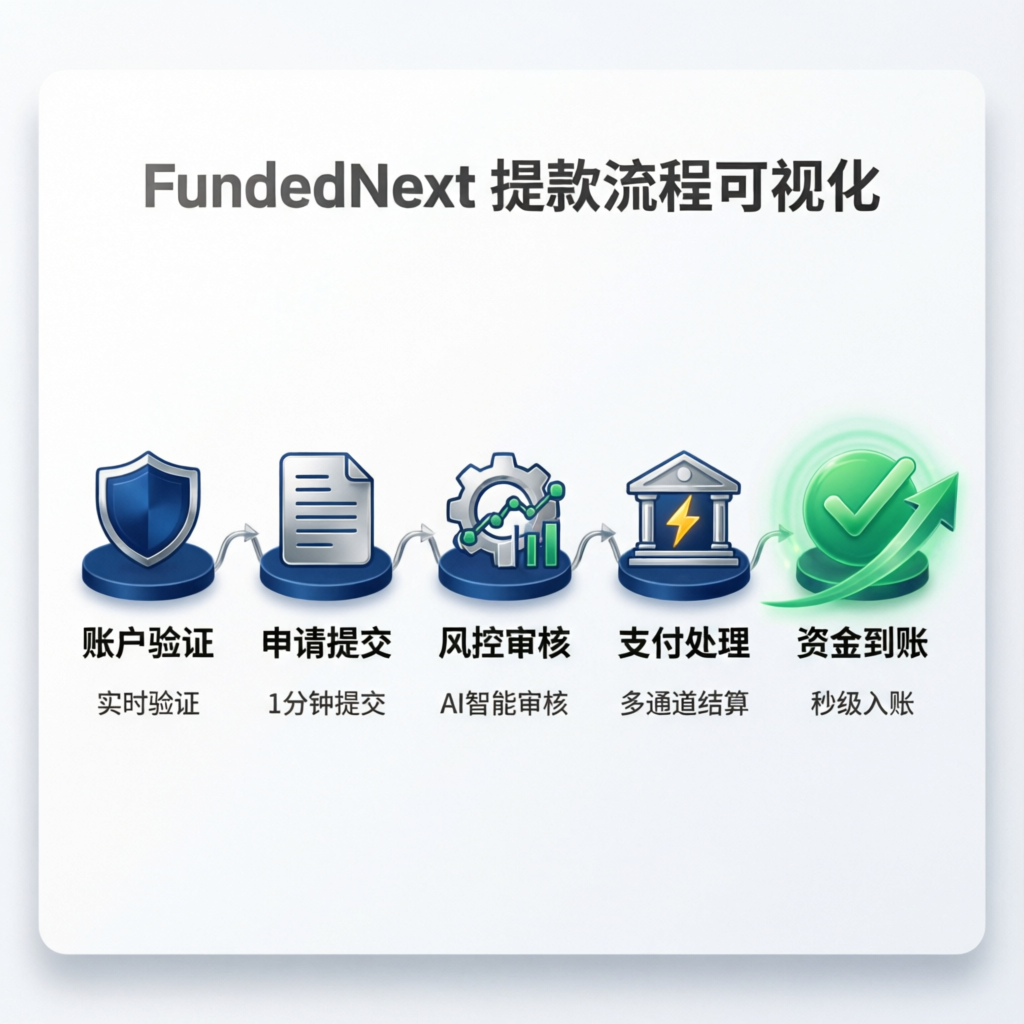
The payout process typically works as follows:
For tax purposes, the timing of when you recognize income from FundedNext payouts depends on your accounting method. Most individual traders use the cash basis method, meaning you report income when you actually receive the fundsânot when the profits are generated on your trading account.
This distinction is important because it means you don’t owe taxes on unrealized profits sitting in your funded account. You only report and pay taxes on the amounts you’ve actually withdrawn and received. This can be advantageous for tax planning, as it allows you to potentially defer income recognition by timing your payout requests strategically.
Many successful funded trader next level professionals receive multiple payouts throughout the year. Each payout should be recorded separately for tax purposes, and you should maintain detailed records of the date, amount, and source of each withdrawal. This documentation becomes invaluable during tax season and provides a clear audit trail if the IRS ever questions your reported income.
When calculating your total taxable income from FundedNext, you’ll need to sum all payouts received during the tax year. This total becomes your gross income from prop firm trading, which you’ll then reduce by allowable business deductions to arrive at your net taxable income.
Consider timing your payout requests around year-end to optimize your tax position. If you expect to be in a lower tax bracket next year, you might delay a December payout until January. Conversely, if you need to recognize income this year to maximize deductions, request your payout before December 31st. Always consult with a tax professional before making timing decisions.
For traders outside the United States, FundedNext offers various payout methods including bank wire transfers, cryptocurrency, and other electronic payment options. The tax treatment of these payouts depends on your country of residence and any tax treaties that may exist between your country and the jurisdiction where FundedNext operates.
Many international traders find that cryptocurrency payouts offer additional flexibility, though the tax treatment of crypto varies widely. In the US, for example, receiving cryptocurrency as payment is a taxable event, and you’ll need to report the fair market value of the crypto at the time of receipt as income.
Expert traders ready to help you navigate the challenge process and secure your funded account with professional support.
One of the most exciting developments in the prop firm space has been the rise of prop firm futures trading platforms. FundedNext has positioned itself as a leader in this space, offering traders access to futures markets with competitive funding terms. But futures trading comes with its own unique tax considerations that every trader should understand.
In the United States, most futures contracts are classified as Section 1256 contracts for tax purposes. This classification triggers what’s known as the “60/40 rule”â60% of your gains and losses are treated as long-term capital gains or losses, while 40% are treated as short-term, regardless of how long you actually held the position.
This is a significant advantage for futures trading firm traders because long-term capital gains are taxed at preferential rates (0%, 15%, or 20%) compared to short-term gains, which are taxed at your ordinary income rate. Even if you day trade futures and hold positions for just minutes, the 60/40 rule still applies.

When you trade futures through a futures prop firm like FundedNext, the tax implications can be more complex than forex trading. Here’s why: the underlying instruments you’re trading (futures contracts) have specific tax treatment under Section 1256, but your relationship with the prop firm may classify your earnings differently.
There are two primary ways your futures funded accounts earnings may be taxed:
Scenario 1: Business Income Classification
If your payouts from the prop firm are classified as compensation for services (self-employment income), the 60/40 rule may not directly apply to your payout amounts. Instead, your entire payout is treated as business income, and you pay self-employment tax plus income tax on the net amount after deductions.
Scenario 2: Section 1256 Treatment
In some structures, particularly if you qualify for Trader Tax Status and make a Section 475(f) election, your futures trading gains and losses may be reported under Section 1256 rules. This allows you to benefit from the 60/40 split on your trading results.
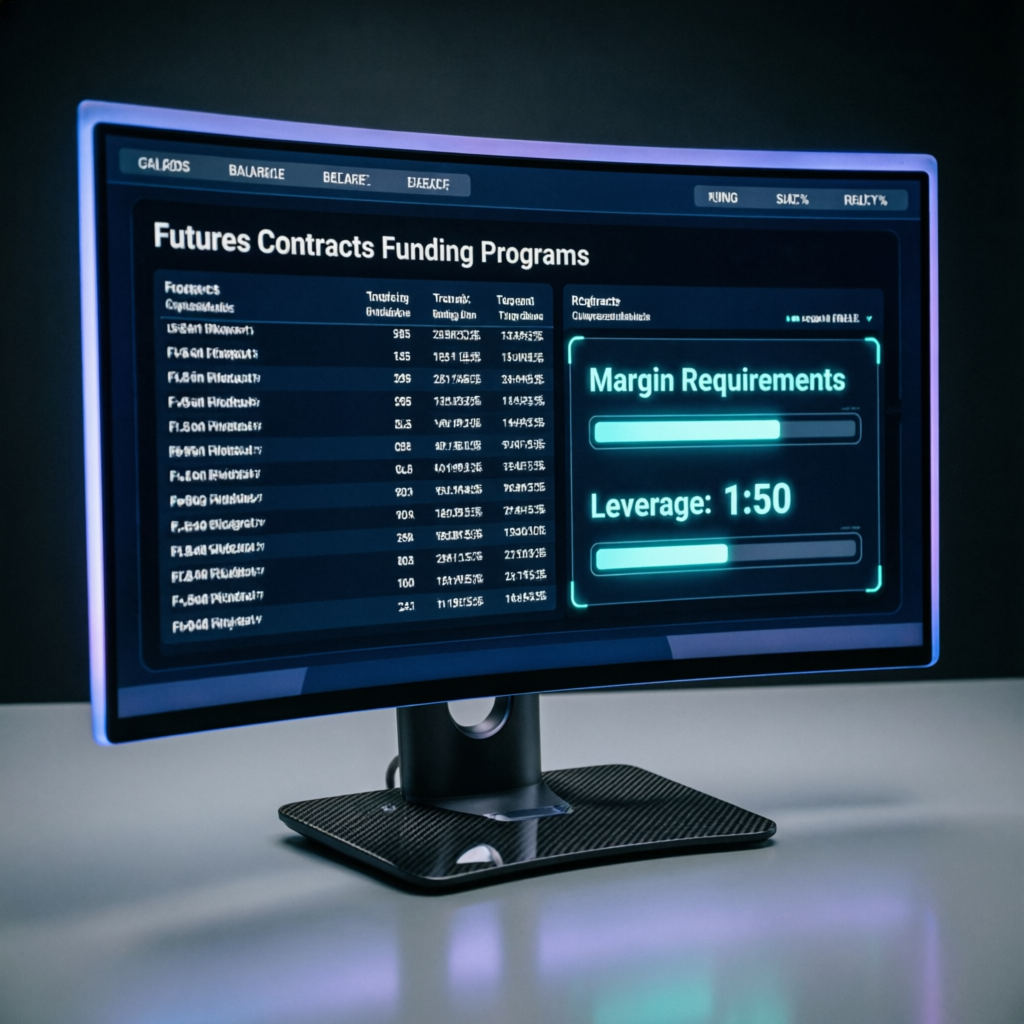
The futures contracts funding programs offered by FundedNext provide traders with access to significant capital for futures trading. These programs typically feature lower capital requirements than trading futures with your own money, making them accessible to a broader range of traders.
Key features of futures funding programs include:
If you’re wondering how to qualify for funded futures account challenge, the process is straightforward but requires discipline and skill. FundedNext typically requires you to pass an evaluation phase where you demonstrate consistent profitability while adhering to risk management rules. The challenge structure mirrors what you’d find with other leading futures prop firms US-based platforms.
Key requirements usually include:
Once you pass the challenge, you’ll receive a funded futures account with real capital to trade. From that point forward, your profits are subject to the payout rules and tax implications we’ve discussed throughout this guide.
For traders who want to skip the evaluation phase entirely, some platforms offer instant funded futures prop firm programs. These allow you to begin trading with funded capital immediately, though they typically come with higher upfront costs or different profit split arrangements. FundedNext has explored various funding models to accommodate different trader preferences and experience levels.
Whether you choose a challenge-based approach or an instant funding option, the tax treatment of your earnings remains fundamentally the sameâyou’ll report your payouts as income and claim allowable deductions to minimize your tax burden.

One of the most powerful aspects of being classified as a self-employed trader is the ability to deduct ordinary and necessary business expenses. These deductions can significantly reduce your taxable income and, by extension, your tax liability. Let’s explore the most common and valuable deductions available to FundedNext traders.
Trading computers, monitors, internet service, trading software subscriptions, and data feeds. These are among the most common and straightforward deductions for prop traders.
If you have a dedicated space used exclusively for trading, you may qualify for the home office deduction. This can include a portion of rent, utilities, and mortgage interest.
Trading courses, books, seminars, mentorship programs, and coaching services that improve your trading skills are deductible business expenses.
Phone bills, mobile devices, and communication tools used for trading purposes. If you use your phone for both personal and business purposes, you can deduct the business-use percentage.
One deduction that’s particularly relevant for FundedNext traders is the cost of challenge fees. When you purchase a challenge to qualify for a funded account, that fee is generally deductible as a business expenseâspecifically as an education or training expense, or as a cost of doing business.
However, the deductibility of challenge fees depends on several factors. If you fail the challenge, the fee is typically fully deductible as a business loss. If you pass and receive a funded account, the treatment may differâsome tax professionals argue the fee should be amortized over the life of your funded trading career, while others treat it as a current-year deduction.
Many traders use Prop Firms Passing Service providers to help them navigate challenges more efficiently. The fees paid to these services are also generally deductible as education or consulting expenses, provided they relate directly to your trading business.
Fees paid to tax professionals, accountants, and financial advisors who assist with your trading business are deductible. This includes the cost of preparing your tax return, consulting on business structure decisions, and obtaining advice on tax optimization strategies.
Given the complexity of prop firm taxation, investing in a qualified tax professional who understands the nuances of trading income is not just a deductible expenseâit’s one of the most valuable investments you can make in your trading career.
If you attend trading conferences, workshops, or networking events that are directly related to your trading business, the associated travel expenses may be deductible. This includes airfare, hotel accommodations, meals (typically 50% deductible), and registration fees.
Keep detailed records of the business purpose of each trip, including notes on sessions attended, contacts made, and knowledge gained. The IRS may scrutinize travel deductions, so thorough documentation is essential.
Professional passing services and account management to help you achieve consistent results and secure your funding.
Proper record keeping is the foundation of effective tax planning for any FundedNext trader. Without accurate records, you can’t properly report your income, claim deductions, or defend your tax positions if questioned by authorities. Let’s discuss the best practices for maintaining your trading records.
Most individual traders use the cash basis method of accounting, which means you recognize income when you receive it and deduct expenses when you pay them. This is the simplest and most common method for prop firm traders.
The accrual basis method, on the other hand, recognizes income when it’s earned (regardless of when you receive payment) and expenses when they’re incurred (regardless of when you pay them). This method is more complex and is typically used by larger businesses. For most FundedNext traders, cash basis is the appropriate choice.
Here’s a checklist of records every prop firm trader should maintain:
Modern traders have access to excellent tools for maintaining their financial records. Consider using:
Set aside time each week to update your financial records. Consistent, weekly record keeping is far more effective than trying to reconstruct your finances at tax time. Many successful funded trader next level professionals dedicate an hour each week to financial administrationâtreating it with the same importance as their trading analysis.
FundedNext serves traders from around the world, and the tax implications of prop firm trading vary significantly depending on your country of residence. If you’re a non-US trader using prop firms that accept US clients, you need to understand how your local tax authority treats prop firm income.
In many countries, income from prop firm trading is treated similarly to self-employment income or freelance income. However, the specific classification, tax rates, and available deductions vary widely. Here are some general considerations:
If you’re trading with a prop firm based in a different country, you may need to consider whether a tax treaty exists between your country and the firm’s country of operation. Tax treaties are designed to prevent double taxation and clarify which country has the right to tax specific types of income.
Most FundedNext payouts are structured in a way that avoids creating a permanent establishment in the firm’s country of operation, which means you’ll typically report and pay taxes only in your country of residence. However, this is a complex area that requires professional guidance.
For Spanish-speaking traders wondering como comprar una cuenta de fondeo, the process is straightforwardâFundedNext offers accessible pricing and multiple payment options. From a tax perspective, traders in Spanish-speaking countries should consult local tax professionals to understand how prop firm payouts are treated under their country’s tax laws. Many Latin American countries have specific provisions for income from foreign sources that may affect your tax obligations.
Many traders considering prop firm funding compare FTMO vs FundedNext. From a tax perspective, the treatment of income from both platforms is fundamentally similarâboth are classified as self-employment income for US taxpayers. However, there are some notable differences that may affect your tax planning.
| Feature | FundedNext | FTMO |
|---|---|---|
| Tax Classification | Self-employment income | Self-employment income |
| Max Profit Split | Up to 90% | Up to 90% |
| Futures Trading | Available | Forex/CFDs only |
| 1099 Issued | Depends on structure | Typically not issued |
| Payout Frequency | Regular intervals | Regular intervals |
| Deduction Opportunities | Full business deductions | Full business deductions |
| US Client Acceptance | Yes | Yes |
| Instant Funding Option | Available | Limited |
From a purely tax perspective, there’s no significant advantage to choosing one platform over the other. Both will generate self-employment income that’s subject to the same tax rules. The choice between FundedNext and FTMO should be based on trading preferences, platform features, account sizes, and the specific markets you want to trade.
What makes FundedNext particularly attractive for tax-conscious traders is the availability of futures trading. Because futures contracts receive preferential tax treatment under Section 1256, traders who focus on futures through FundedNext may have additional tax optimization opportunities compared to traders limited to forex and CFDs.
Professional passing services and account management to help you succeed.
Unlock Your Funded AccountNow that you understand the fundamentals of prop firm taxation, let’s explore advanced strategies that can help you minimize your tax liability and maximize your after-tax profits. These strategies should be implemented with the guidance of a qualified tax professional.
One of the most powerful tax optimization strategies for prop firm traders is choosing the right business structure. While most traders start as sole proprietors, forming an LLC or S-Corporation can provide significant tax advantages as your income grows.
S-Corporation advantages:
LLC advantages:
As a self-employed trader, you have access to retirement accounts that can significantly reduce your taxable income while building wealth for the future:
Maximizing retirement contributions is one of the most effective ways to reduce your current-year taxable income while simultaneously building long-term wealth. For high-earning FundedNext traders, this strategy alone can save thousands in taxes annually.
As a self-employed trader, you’re responsible for making quarterly estimated tax payments. These payments help you avoid penalties and interest charges that the IRS imposes for underpayment of taxes during the year.
The quarterly payment schedule is:
Many traders use the “safe harbor” rule to avoid underpayment penalties. This rule allows you to pay either 90% of your current year’s tax liability or 100% (110% for high-income taxpayers) of your prior year’s tax liability through estimated payments and withholding.
If you trade with your own capital alongside your prop firm accounts, you can use tax-loss harvesting to offset gains. This involves selling positions that have declined in value to realize losses that can offset gains from other investments or from your prop firm income (if structured appropriately).
This strategy is particularly relevant for traders who maintain both personal trading accounts and funded accounts futures. By coordinating the timing of losses in personal accounts with gains from prop firm payouts, you can potentially reduce your overall tax burden.
Don’t forget about state and local taxes! Depending on where you live, you may owe significant state income tax in addition to federal taxes. Some states, like Texas, Florida, and Nevada, have no state income tax, which can be a significant advantage for prop firm traders.
If you’re considering relocating, the tax implications of your move should factor into your decision. A trader earning $200,000 annually from FundedNext payouts could save tens of thousands in state taxes by living in a no-income-tax state versus a high-tax state like California or New York.
Even experienced traders can make costly tax mistakes. Here are the most common errors we see among FundedNext traders and how to avoid them:
Some traders mistakenly believe that if they don’t receive a 1099 from the prop firm, they don’t need to report the income. This is incorrect. All income earned through prop firm trading must be reported, regardless of whether you receive a tax form. The IRS has sophisticated data-matching capabilities, and unreported income can trigger audits and penalties.
One of the biggest mistakes new prop firm traders make is commingling personal and business finances. Always open a separate business bank account for your trading income and expenses. This makes record keeping easier and provides clear documentation in case of an audit.
Many traders are surprised by a large tax bill at year-end because they didn’t make quarterly estimated tax payments. The IRS expects self-employed individuals to pay taxes throughout the year, not just at tax time. Failing to make estimated payments can result in underpayment penalties and interest charges.
Leaving money on the table by failing to track and claim all deductible expenses is a common error. Keep receipts for everythingâtrading software subscriptions, internet bills, office supplies, education costs, and more. Even small expenses add up over time and can significantly reduce your taxable income.
While tax preparation software is excellent for simple returns, prop firm taxation involves nuances that generic tax software may not handle correctly. Consider working with a tax professional who understands the prop firm industry and can ensure your return is prepared accurately.
The information in this guide is educational and should not be considered tax advice. Tax laws are complex and constantly changing. Always consult with a qualified tax professional who understands your specific situation before making tax-related decisions. A good tax professional will pay for themselves many times over through deductions found and penalties avoided.
Whether you’re just beginning your prop firm journey or looking to optimize your existing funded accounts, professional guidance can make all the difference.
Common questions about FundedNext taxation, prop firm trading, and funded account management answered by experienced traders.