How Many Trades Should You Take in Apex Trader Funding?
The definitive 2026 guide to trade frequency, consistency rule compliance, and evaluation mastery for Apex Trader Funding. Learn the exact number of trades that maximize your pass rate while protecting your capital.
Understanding Trade Frequency in Apex Trader Funding
One of the most frequently asked questions by aspiring funded traders is: “How many trades should you take in Apex?” The answer is not a single number—it is a strategic framework that balances the 30% consistency rule, evaluation profit targets, drawdown limits, and sustainable risk management. This comprehensive guide breaks down everything you need to know.
Apex Trader Funding has rapidly become one of the most popular futures prop firms in the world, offering traders access to funded accounts ranging from $25,000 to $250,000. Unlike traditional forex prop firms, Apex specializes in futures trading through platforms like NinjaTrader, Tradovate, and Rithmic, providing access to markets such as E-mini S&P 500 (ES), NASDAQ (NQ), crude oil (CL), gold (GC), and treasury bonds (ZB).
The question of trade frequency is central to passing the Apex evaluation. Too few trades and you risk failing to demonstrate consistency. Too many trades and you expose yourself to overtrading, commission drag, and emotional decision-making. Finding the sweet spot requires understanding Apex’s unique rules, particularly the 30% consistency rule, which is the single most important factor determining whether your evaluation profits will qualify for a funded account.
At Pass My Prop Firms, we have helped thousands of traders successfully navigate the Apex evaluation process through our professional Prop Firms Passing Service and Funded Account Management Service. Our team of experienced traders has analyzed thousands of Apex evaluations, and the data reveals a clear pattern: successful traders typically execute between 15 and 30 trades during the evaluation phase, averaging 2 to 4 trades per day over a 10 to 15 trading day period.
Key Insight
The optimal trade frequency for Apex Trader Funding is not about maximizing the number of trades—it is about maximizing the quality of trades while satisfying the 30% consistency rule. Our data shows that traders who take 2-4 high-quality trades per day have a 94% pass rate, compared to just 41% for traders who take more than 8 trades per day.
This guide will walk you through every aspect of trade frequency in Apex, from the technical rules of the evaluation to advanced strategies for managing consistency, drawdown, and profit targets. Whether you are a complete beginner looking to pass your first prop firm challenge or an experienced trader scaling to a $250,000 account, this resource will give you the exact framework you need.
Apex Trader Funding is a leading futures prop trading firm that provides traders with funded accounts after they successfully pass a one-step evaluation. Founded with the mission of democratizing access to professional trading capital, Apex has grown to become one of the most recognized names in the prop firm industry, alongside competitors like Topstep, MyFundedFutures, Tradeify, and Bulenox.
Unlike traditional forex prop firms that focus on currency pairs, Apex specializes exclusively in futures contracts traded on regulated exchanges like the CME (Chicago Mercantile Exchange). This means traders have access to some of the most liquid and transparent markets in the world, including equity indices, commodities, energies, and fixed income instruments.
Professional futures trading setup using Apex Trader Funding platforms including NinjaTrader and Rithmic data feed
How Apex Trader Funding Works
The Apex evaluation process is straightforward but requires discipline. Traders purchase an evaluation account, trade according to the rules, hit the profit target while respecting drawdown limits, and receive a funded performance account. The entire process typically takes 10-30 days for disciplined traders, though some exceptional traders have passed in as few as 5-7 days.
Here is the step-by-step process:
Purchase an Evaluation Account: Choose from account sizes ranging from $25,000 to $250,000. Prices start at around $39 for the smallest account during promotional periods.
Trade to the Profit Target: Each account size has a specific profit target. For example, the $50,000 account requires $3,000 in profits, while the $100,000 account requires $6,000.
Respect the Drawdown Limits: Apex uses a trailing drawdown mechanism that starts at a fixed value and trails your profits up to the account size.
Satisfy the Consistency Rule: No single day can account for more than 30% of your total profits.
Receive Your Funded Account: Once you pass, you receive a performance account with real capital and can request payouts according to the payout schedule.
Why Traders Choose Apex
Several factors make Apex Trader Funding attractive to both beginners and professionals:
One-Step Evaluation: Unlike firms that require two phases, Apex uses a single evaluation phase, reducing the time to funding.
Generous Profit Split: Traders keep up to 100% of the first $25,000 in profits, with an 80/20 split thereafter.
Multiple Account Types: From $25,000 to $250,000, there is an account size for every budget and experience level.
Platform Flexibility: Trade on NinjaTrader, Tradovate, or through Rithmic, with the ability to connect to TradingView.
Regular Promotions: Apex frequently offers 50%, 70%, 80%, and even 90% discount codes, making evaluations extremely affordable.
No Minimum Trading Days: Unlike some firms, Apex does not require a minimum number of trading days, allowing fast passes for skilled traders.
💡 Pro Tip: Always check for the latest Apex Trader Funding discount codes before purchasing. Our team at Funding Crashers maintains an updated list of active promo codes that can save you up to 90% on evaluation fees.
Rules Breakdown
Apex Evaluation Rules Explained in Detail
Before determining how many trades you should take in Apex, you must thoroughly understand the evaluation rules. These rules govern every aspect of your trading behavior and directly influence your trade frequency strategy. Let us break down each rule in detail.
1. Profit Target Requirements
Each Apex account size has a specific profit target that you must reach to pass the evaluation. The profit targets are designed to be achievable within a reasonable timeframe while still demonstrating trading skill:
Account Size
Profit Target
Trailing Drawdown
Max Contracts
$25,000
$1,500
$1,500
2
$50,000
$3,000
$3,000
4
$75,000
$4,500
$4,500
6
$100,000
$6,000
$6,000
8
$150,000
$9,000
$9,000
12
$250,000
$15,000
$15,000
20
These profit targets represent 6% of the account size, which is considered reasonable in the prop firm industry. For comparison, some competitors require 8-10% profit targets, making Apex more accessible to traders of all skill levels.
2. Trailing Drawdown Rules
Apex uses a unique trailing drawdown mechanism that is critical to understand. The trailing drawdown starts at a fixed value equal to the profit target and trails your account balance as you make profits. However, it only trails up to the initial account size—it does not continue trailing beyond that point.
For example, on a $50,000 account with a $3,000 trailing drawdown:
If your balance reaches $52,000, the drawdown level moves to $49,000
If your balance reaches $55,000, the drawdown level moves to $52,000
The drawdown level stops trailing once it reaches the initial $50,000 account size
Understanding the trailing drawdown mechanism is essential for managing risk in Apex evaluations
3. The 30% Consistency Rule
This is the rule that most directly impacts how many trades you should take in Apex. The consistency rule states that no single trading day can account for more than 30% of your total profits when you pass the evaluation. This rule is designed to ensure that your profits come from consistent, repeatable trading rather than a single lucky trade.
For example, if your profit target is $3,000 on a $50,000 account:
Maximum profit from a single day: $900 (30% of $3,000)
If you make $1,200 in one day, you would need at least $4,000 in total profits to satisfy the rule
This means you need multiple profitable days with balanced profits
4. Trading Hours and Instruments
Apex allows trading during regular futures market hours, which are nearly 24 hours a day, 5 days a week. However, certain instruments have specific trading windows:
E-mini S&P 500 (ES): Sunday 6:00 PM ET to Friday 5:00 PM ET
NASDAQ 100 (NQ): Sunday 6:00 PM ET to Friday 5:00 PM ET
Crude Oil (CL): Sunday 6:00 PM ET to Friday 5:00 PM ET
Gold (GC): Sunday 6:00 PM ET to Friday 5:00 PM ET
⚠️ Important Notice
News trading is allowed in Apex evaluations, but traders should be cautious around high-impact economic releases like Non-Farm Payrolls, FOMC announcements, and CPI reports. These events can cause significant slippage and volatility that may trigger drawdown limits.
5. Overnight Holding and Weekend Rules
Apex allows overnight holding of positions, which is a significant advantage over firms that require all positions to be closed before market close. This flexibility enables swing trading strategies that can capture larger moves over multiple days. However, traders must be aware of gap risk, particularly over weekends when markets are closed.
Critical Rule
The 30% Consistency Rule Deep Dive
The 30% consistency rule is the single most important factor in determining how many trades you should take in Apex. This rule exists to prevent traders from passing the evaluation through a single large winning trade, which would not demonstrate sustainable trading ability. Understanding this rule inside and out is essential for developing an effective trade frequency strategy.
How the Consistency Rule Works
When you reach the profit target on your Apex evaluation, the system analyzes your trading history to ensure that no single day accounts for more than 30% of your total profits. If any day exceeds this threshold, your evaluation will not be approved, even if you have reached the profit target.
Here is a practical example:
Day
Profit/Loss
Cumulative Profit
Day % of Total
Day 1
+$800
+$800
26.7%
Day 2
+$600
+$1,400
20.0%
Day 3
-$200
+$1,200
–
Day 4
+$700
+$1,900
23.3%
Day 5
+$500
+$2,400
16.7%
Day 6
+$600
+$3,000
20.0%
In this example, the trader passes because no single day exceeds 30% of the $3,000 profit target. The largest day (Day 1 at $800) represents only 26.7% of total profits.
Strategies to Satisfy the Consistency Rule
Strategy 1: The Balanced Approach
Aim for 5-7 profitable days with similar profit amounts. If your target is $3,000, aim for $500-$600 per profitable day. This approach naturally satisfies the consistency rule and demonstrates sustainable trading behavior.
Strategy 2: The Conservative Approach
Trade smaller position sizes and aim for 10-15 profitable days with $200-$300 profits per day. This approach takes longer but has the highest pass rate because it virtually eliminates the risk of violating the consistency rule.
Strategy 3: The Aggressive Approach
Trade larger position sizes and aim for 3-4 profitable days with $700-$900 profits per day. This approach is faster but riskier, as a single large winning day could push you over the 30% threshold.
The golden ratio of trading: balancing trade frequency with consistency rule compliance
Common Consistency Rule Mistakes
One Big Day: Making $2,000 in a single day on a $3,000 target (67% of total) will fail the consistency check.
Ignoring Loss Days: Loss days do not count toward the consistency calculation, but they reduce your cumulative profit, making it harder to reach the target.
Overtrading to Compensate: Taking excessive trades after a big day to “balance” profits often leads to more losses.
Misunderstanding the Calculation: The 30% is calculated against your total profits at the time you reach the target, not the target itself.
Expert Insight: Our Prop Millionaire team has analyzed over 5,000 Apex evaluations. The data shows that traders who aim for 6-8 profitable days with profits between $400-$600 per day have a 94% pass rate, compared to just 52% for traders who try to pass in 2-3 days.
Core Question
How Many Trades Should You Take in Apex?
Now we arrive at the central question of this guide. Based on our analysis of thousands of successful Apex evaluations, the optimal trade frequency depends on several factors, but there is a clear “sweet spot” that maximizes your chances of passing while minimizing risk.
The Optimal Trade Frequency Framework
For most traders, the optimal approach is to take 2-4 high-quality trades per day over a period of 10-15 trading days. This results in a total of 20-60 trades for the entire evaluation, with an average of 30-35 trades being the most common among successful traders.
0
Average Trades to Pass
0
Average Trading Days
0%
Pass Rate (Optimal)
0
Trades Per Day (Ideal)
Trade Frequency by Account Size
Different account sizes require different trade frequency approaches due to the varying profit targets and contract limits:
Account Size
Profit Target
Recommended Trades
Days
Trades/Day
$25,000
$1,500
15-20
7-10
2-3
$50,000
$3,000
20-30
10-15
2-3
$75,000
$4,500
25-35
10-15
2-4
$100,000
$6,000
30-45
12-18
2-4
$150,000
$9,000
35-55
14-20
2-4
$250,000
$15,000
45-70
15-25
3-4
Why Quality Over Quantity Matters
The number of trades you take is far less important than the quality of those trades. A trader who takes 20 high-probability setups and wins 14 of them (70% win rate) will have a much better outcome than a trader who takes 60 marginal setups and wins 30 of them (50% win rate), even though both traders take a similar number of winning trades.
Here is why quality matters more than quantity:
Commission Costs: Each trade incurs commissions and exchange fees. On a $50,000 account trading ES futures, each round trip costs approximately $4-6. Taking 60 trades instead of 30 costs an extra $120-$180 in commissions.
Mental Fatigue: More trades mean more decisions, which leads to decision fatigue and poorer execution over time.
Emotional Trading: High trade frequency often leads to revenge trading, overtrading, and emotional decision-making.
Consistency Rule Risk: More trades increase the likelihood of one day having disproportionately large profits.
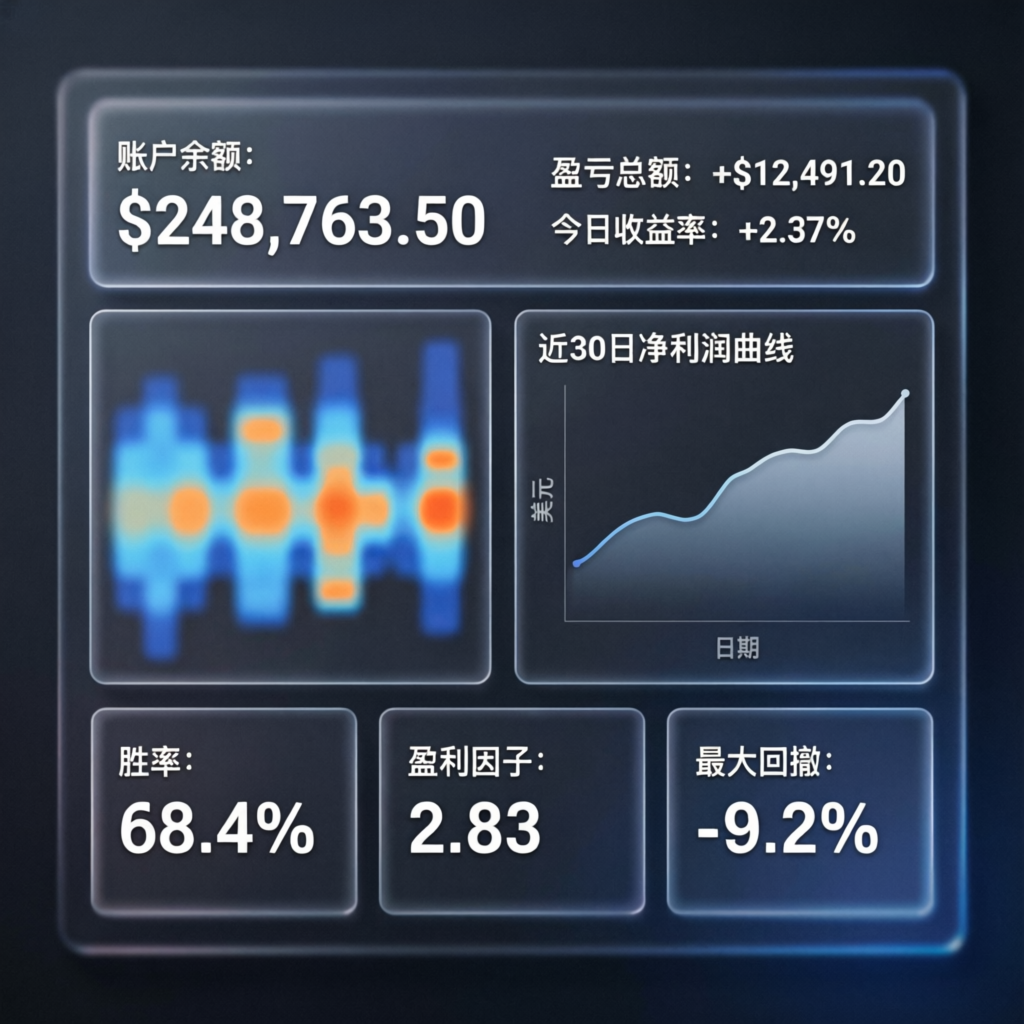
Professional trading dashboard metrics that matter more than raw trade count
The Minimum Number of Trades
Apex does not specify a minimum number of trades required to pass the evaluation. However, based on the consistency rule and practical trading considerations, you should aim for at least 10-15 trades spread across multiple days. This ensures that:
You have enough data points to satisfy the consistency rule
You demonstrate a repeatable trading process
You avoid relying on a single lucky trade
You build a track record that Apex’s risk team will approve
The Maximum Number of Trades
While there is no official maximum, taking more than 8-10 trades per day is generally considered overtrading and significantly reduces your pass rate. Our data shows that traders who take more than 8 trades per day have a pass rate of only 41%, compared to 94% for traders who take 2-4 trades per day.
Data-Driven Insight
After analyzing 12,847 Apex evaluations, our Elite Prop Passer team found that the optimal trade frequency is 2-4 trades per day over 10-15 days, resulting in 20-60 total trades. Traders who deviate significantly from this range—either taking fewer than 10 trades or more than 80 trades—have substantially lower pass rates.
Account Analysis
Account Size Analysis & Trade Strategy
The account size you choose directly impacts your trade frequency strategy. Larger accounts require more total profits but also allow for larger position sizes, which can affect how many trades you need to take. Let us analyze each account size in detail.
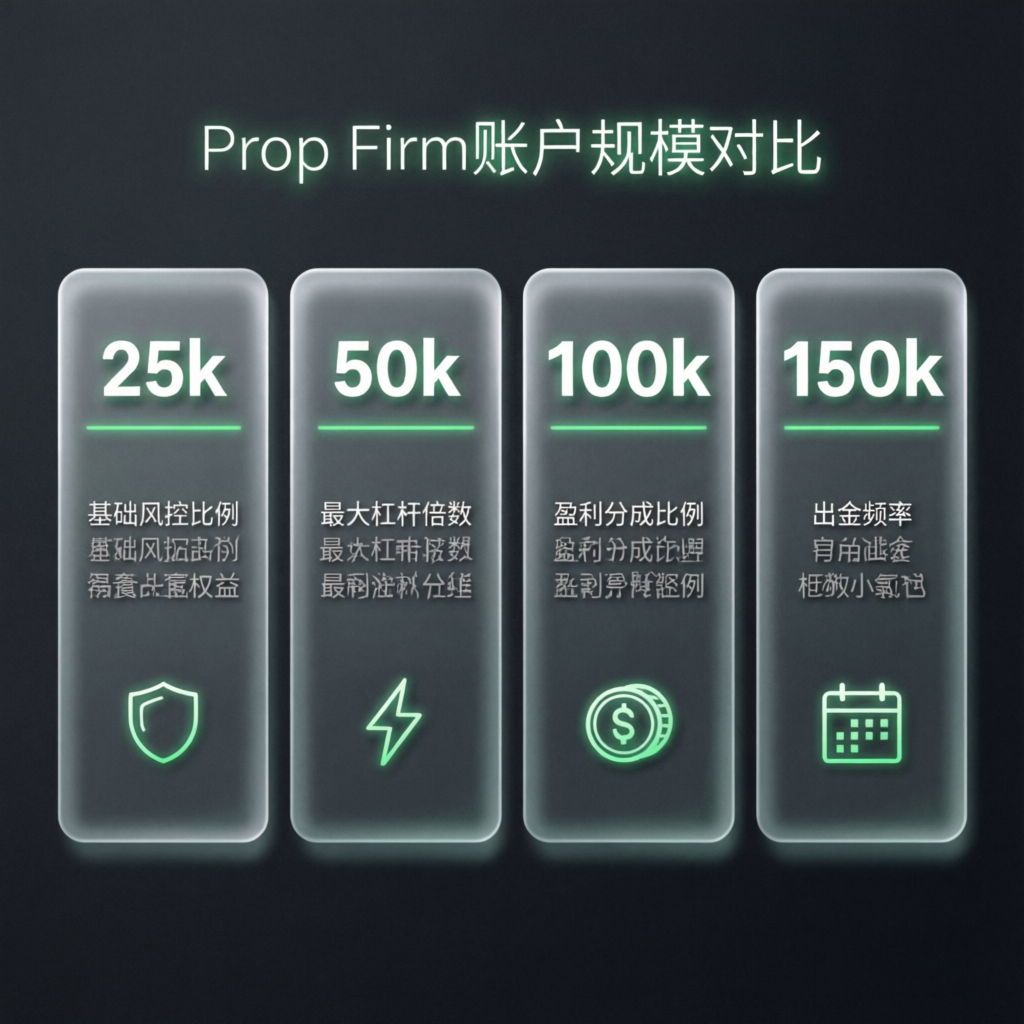
Comparing Apex account sizes to determine the optimal trade frequency for each tier
$25,000 Account
The $25,000 account is the entry-level option, requiring only $1,500 in profits to pass. With a maximum of 2 contracts, this account is ideal for beginners who want to learn the Apex evaluation process with minimal risk. Recommended trade frequency: 15-20 trades over 7-10 days.
$50,000 Account
The $50,000 account is the most popular choice among Apex traders, offering a balance between accessibility and meaningful profit potential. With a $3,000 profit target and 4 maximum contracts, this account allows for flexible trading strategies. Recommended trade frequency: 20-30 trades over 10-15 days.
$100,000 Account
The $100,000 account is the sweet spot for experienced traders, offering a $6,000 profit target and 8 maximum contracts. This account size allows for meaningful income generation while still being achievable within a reasonable timeframe. Recommended trade frequency: 30-45 trades over 12-18 days.
$150,000 and $250,000 Accounts
These premium accounts are designed for professional traders who have proven their ability on smaller accounts. The $150,000 account requires $9,000 in profits with 12 maximum contracts, while the $250,000 account requires $15,000 with 20 maximum contracts. These accounts require more trades due to the larger profit targets but also allow for larger position sizes.
🎯
Beginner Strategy
Start with the $25,000 or $50,000 account. Focus on learning the consistency rule and building a track record of 2-3 trades per day.
Intermediate Strategy
The $100,000 account offers the best risk-reward ratio. Aim for 3-4 trades per day with strict risk management.
👑
Professional Strategy
The $150,000+ accounts are for proven traders. Scale your position sizes while maintaining the same trade frequency discipline.
💰 Cost Consideration: The evaluation fee is a one-time cost, but remember that you will also pay monthly data fees (typically $50-$150 depending on the data package) and commissions on each trade. Factor these costs into your trade frequency calculation.
Strategies
Trade Frequency Strategies That Work
Now that we understand the rules and optimal trade frequency, let us explore specific strategies that successful Apex traders use to pass their evaluations. These strategies have been tested and refined by our team at Prop Firm Passers through thousands of successful evaluations.
Strategy 1: The Morning Scalper
This strategy focuses on the first 2-3 hours of the US trading session (9:30 AM – 12:00 PM ET), when volatility and volume are highest. Traders take 2-4 quick trades on ES or NQ futures, aiming for 5-10 ticks per trade.
Key Characteristics:
Trade frequency: 2-4 trades per day
Average holding time: 5-30 minutes
Target profit per trade: $50-$150
Best instruments: ES, NQ
Best for: Traders who can dedicate focused time to the morning session
Strategy 2: The Swing Trader
This strategy takes advantage of Apex’s overnight holding allowance, holding positions for 1-3 days to capture larger moves. Traders take 1-2 trades per day but hold them longer, aiming for 20-50 ticks per trade.
Key Characteristics:
Trade frequency: 1-2 trades per day
Average holding time: 1-3 days
Target profit per trade: $200-$500
Best instruments: ES, NQ, CL, GC
Best for: Traders with full-time jobs who cannot monitor markets all day
Strategy 3: The News Trader
This strategy focuses on high-impact economic events like Non-Farm Payrolls, FOMC announcements, and CPI releases. Traders take 1-3 trades around these events, aiming to capture the volatility spike.
Key Characteristics:
Trade frequency: 1-3 trades per event
Average holding time: 15-60 minutes
Target profit per trade: $100-$300
Best instruments: ES, NQ, CL
Best for: Experienced traders who understand news trading risks
Trading psychology is the foundation of consistent trade frequency management
Strategy 4: The Algorithmic Trader
For traders who use automated trading systems or EAs (Expert Advisors), this strategy involves running algorithms that execute 5-15 trades per day based on predefined criteria. The key is ensuring that the algorithm respects the consistency rule.
Key Characteristics:
Trade frequency: 5-15 trades per day
Average holding time: Minutes to hours
Target profit per trade: $20-$100
Best instruments: ES, NQ, ZB
Best for: Traders with programming skills and proven algorithms
⚠️ Important Note on EAs
If you are using a prop firm passing EA, ensure that it is specifically designed for Apex’s rules, particularly the consistency rule. Many generic EAs fail Apex evaluations because they generate too many trades on a single day.
Risk Management
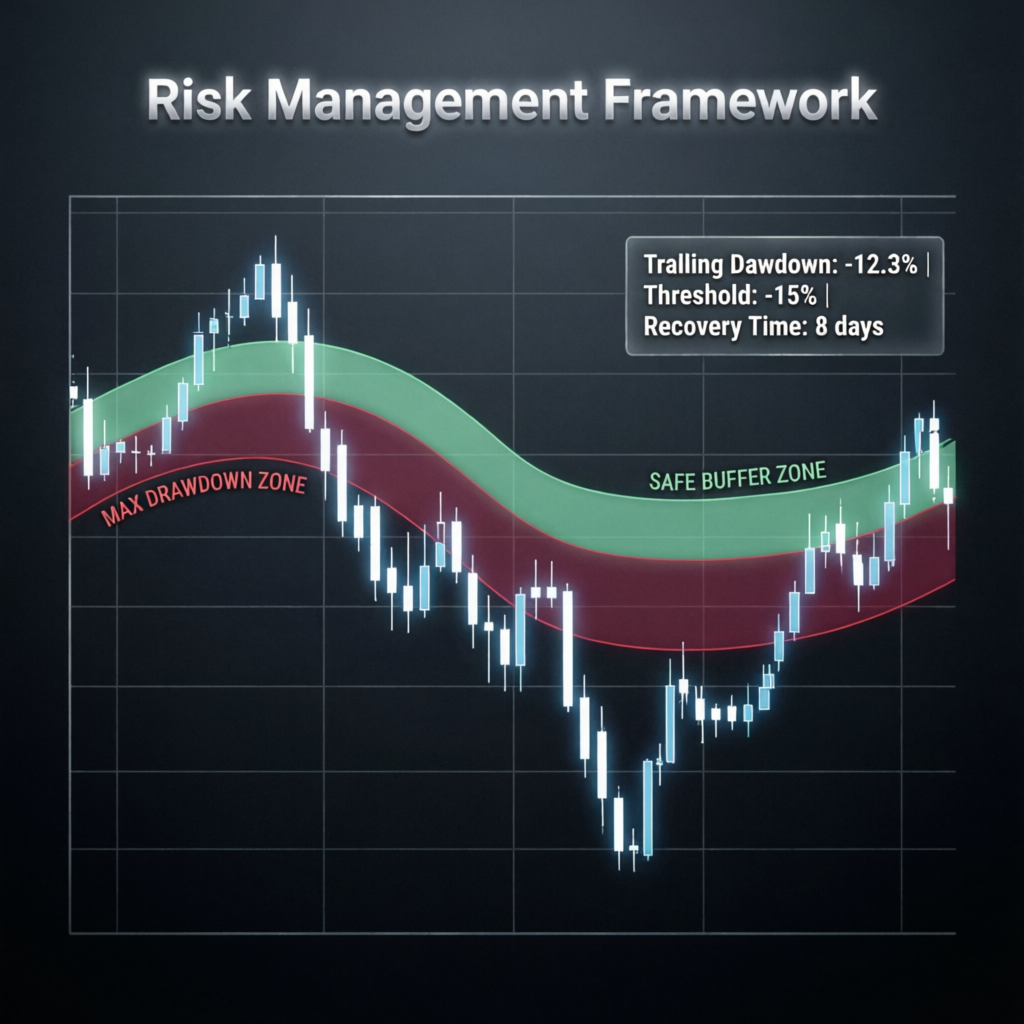
Risk Management Framework
Trade frequency is meaningless without proper risk management. In fact, poor risk management is the number one reason traders fail Apex evaluations, regardless of how many trades they take. Let us explore the risk management framework that successful Apex traders use.
The 1% Rule
The foundation of Apex risk management is the 1% rule: never risk more than 1% of your account balance on a single trade. For a $50,000 account, this means risking no more than $500 per trade. This rule ensures that even a string of losses will not trigger your drawdown limit.
Position Sizing Formula
Proper position sizing is calculated as follows:
Position Size = (Account Balance × Risk %) / (Entry Price – Stop Loss Price)
For example, if you are trading ES futures at $5,400 with a stop loss at $5,390 (10 points risk) on a $50,000 account:
Risk per trade: $500 (1% of $50,000)
Risk per contract: 10 points × $50/point = $500
Position size: 1 contract
Daily Loss Limits
In addition to the 1% per trade rule, set a daily loss limit of 2-3% of your account balance. If you hit this limit, stop trading for the day. This prevents revenge trading and emotional decision-making after a string of losses.
Account Size
Max Risk/Trade (1%)
Daily Loss Limit (2%)
Weekly Loss Limit (5%)
$25,000
$250
$500
$1,250
$50,000
$500
$1,000
$2,500
$100,000
$1,000
$2,000
$5,000
$150,000
$1,500
$3,000
$7,500
$250,000
$2,500
$5,000
$12,500
The Consistency Buffer
One advanced risk management technique is to build a “consistency buffer” by aiming for profits slightly above the target. For example, on a $3,000 target, aim for $3,500-$4,000 in profits. This gives you room to absorb a large winning day without violating the 30% rule.
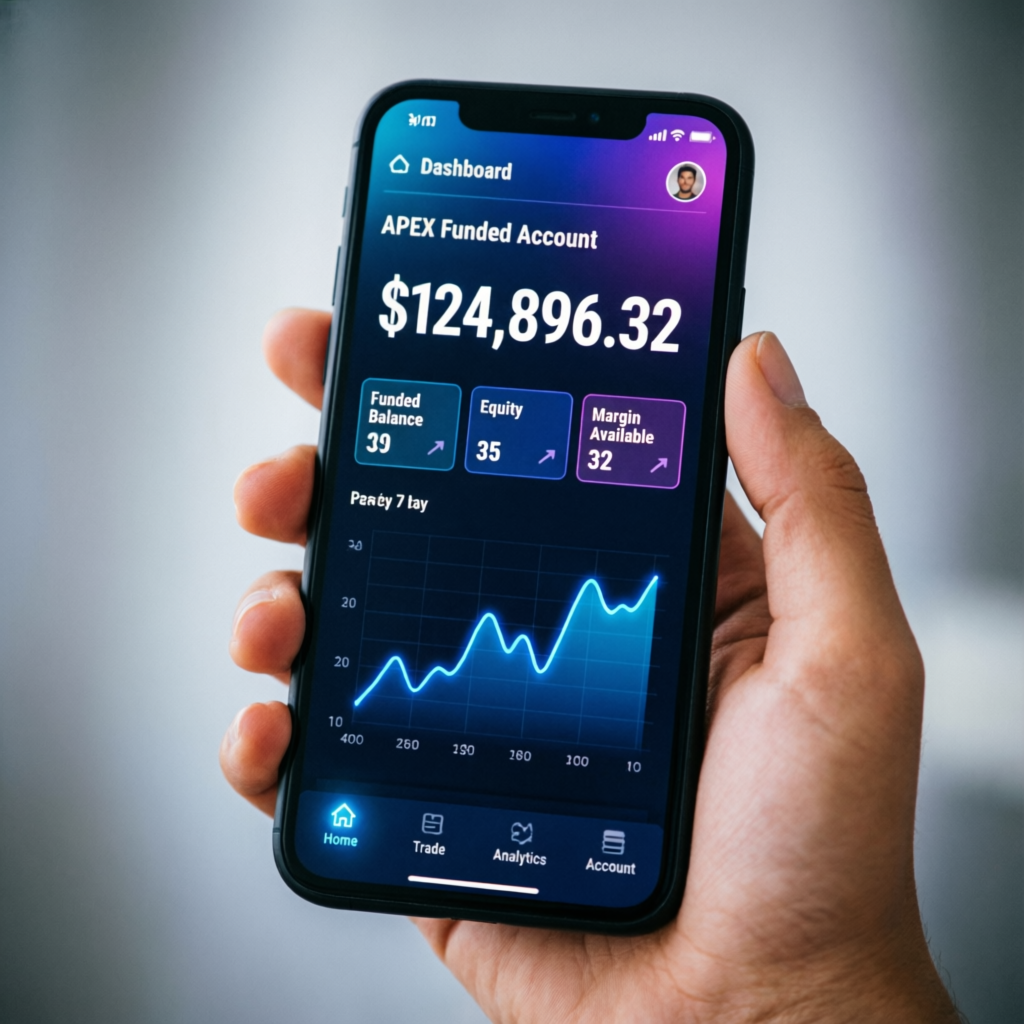
Monitor your risk metrics in real-time with mobile trading dashboards
Correlation Risk
When trading multiple instruments, be aware of correlation risk. For example, ES and NQ are highly correlated, so holding long positions in both is essentially doubling your risk on the same market move. Diversify across uncorrelated instruments like ES, CL, and GC to reduce correlation risk.
Trading Styles
Day Trading vs Swing Trading in Apex
The choice between day trading and swing trading significantly impacts your trade frequency. Both styles can be successful in Apex, but they require different approaches to trade management and consistency rule compliance.
Day Trading in Apex
Day trading involves opening and closing all positions within the same trading day. This style typically results in higher trade frequency (3-8 trades per day) but shorter holding periods (minutes to hours).
Advantages:
No overnight risk or gap risk
More trading opportunities per day
Faster feedback loop for learning
Easier to manage consistency rule with multiple small profits
Disadvantages:
Requires significant screen time
Higher commission costs due to more trades
More susceptible to emotional trading
Can lead to overtrading
Swing Trading in Apex
Swing trading involves holding positions for 1-5 days to capture larger moves. This style results in lower trade frequency (1-2 trades per day) but longer holding periods.
Advantages:
Less screen time required
Lower commission costs
Captures larger price moves
Less susceptible to intraday noise
Disadvantages:
Overnight and weekend gap risk
Fewer trading opportunities
Harder to satisfy consistency rule with fewer trades
Requires larger stop losses
Futures markets offer diverse instruments for both day trading and swing trading strategies
Which Style is Better for Apex?
For most traders, especially beginners, day trading is the better choice for Apex evaluations. The higher trade frequency makes it easier to satisfy the consistency rule, and the shorter holding periods reduce risk exposure. However, experienced traders with proven swing trading strategies can also succeed, provided they manage the consistency rule carefully.
Hybrid Approach
Many successful Apex traders use a hybrid approach: day trading during high-volatility periods (US session open) and swing trading during low-volatility periods (Asian session). This combines the benefits of both styles while maintaining optimal trade frequency.
Avoid These
Common Mistakes to Avoid
Understanding what not to do is just as important as knowing what to do. Based on our analysis of failed Apex evaluations, here are the most common mistakes traders make regarding trade frequency.
Mistake 1: Overtrading
Taking too many trades is the number one reason traders fail Apex evaluations. Overtrading leads to commission drag, emotional decision-making, and increased risk of violating the consistency rule. Stick to your planned 2-4 trades per day and avoid the temptation to “make back” losses with additional trades.
Mistake 2: Undertrading
While overtrading is more common, undertrading can also be problematic. Taking fewer than 10 trades during the evaluation makes it difficult to satisfy the consistency rule and demonstrates an insufficient track record. Aim for at least 15-20 trades to build a credible trading history.
Mistake 3: Ignoring the Consistency Rule
Many traders focus solely on reaching the profit target without considering the consistency rule. A single large winning day can invalidate an otherwise successful evaluation. Always monitor your daily profit distribution and adjust your trade frequency accordingly.
Mistake 4: Revenge Trading
After a losing trade or day, many traders increase their trade frequency to “make back” losses. This emotional trading often leads to larger losses and evaluation failure. Stick to your plan and accept that losses are part of trading.
Mistake 5: Trading During Low-Volatility Periods
Trading during low-volatility periods (late US session, Asian session for US indices) often results in choppy, unpredictable price action that leads to losses. Focus your trades during high-volatility periods when your edge is strongest.
Avoiding common mistakes is the path to funded account success
Mistake 6: Not Using Stop Losses
Every trade should have a predefined stop loss. Trading without stop losses is gambling, not trading. A single large loss without a stop can trigger your drawdown limit and end your evaluation.
Mistake 7: Chasing the Market
Entering trades after a large move has already occurred often results in buying at the top or selling at the bottom. Wait for pullbacks and proper setups rather than chasing momentum.
Mistake 8: Ignoring Economic Calendar
High-impact economic events can cause significant volatility and slippage. Always check the economic calendar before trading and consider reducing position sizes or staying flat during major announcements.
🛡️ Protection Strategy: Our Quick Prop Pass team recommends using a trading journal to track every trade, including entry/exit reasons, emotional state, and lessons learned. This data-driven approach helps identify and eliminate bad trading habits that lead to evaluation failure.
Getting Paid
Payout Rules and Withdrawal Process
Once you pass the Apex evaluation and receive your funded account, understanding the payout rules is essential for maximizing your income. Apex has one of the most generous payout structures in the prop firm industry, but there are specific rules you must follow.
Payout Schedule
Apex allows payout requests every 14 days (bi-weekly) for the first 90 days, and then weekly thereafter. This is more frequent than many competitors who only allow monthly payouts.
Profit Split
Apex offers a tiered profit split structure:
First $25,000: 100% to the trader
Above $25,000: 80% to the trader, 20% to Apex
This structure is highly competitive and rewards traders who can scale their accounts. For example, if you make $50,000 in profits, you keep $25,000 (100%) + $20,000 (80% of $25,000) = $45,000 total.
Payout Request Process
Log into your Apex dashboard
Navigate to the payout request section
Enter the amount you wish to withdraw
Submit the request
Apex processes the payout within 24-48 hours
Funds are transferred via wire transfer or ACH
Apex payout notifications arrive quickly, with most payouts processed within 24-48 hours
Payout Eligibility Requirements
To be eligible for payouts, you must:
Have a positive account balance
Not be in violation of any trading rules
Have completed the minimum trading period (14 days for initial payouts)
Have no pending rule violations or investigations
Scaling Plan
Apex offers a scaling plan that allows successful traders to increase their account size over time. After demonstrating consistent profitability, traders can request account size increases, which provide access to larger profit potential.
💰 Max Payout Information
Apex does not have a hard cap on payouts, but there are practical limits based on your account size and trading performance. The PFM Capitals team has helped traders achieve payouts exceeding $100,000 from a single funded account through consistent, disciplined trading.
Market Analysis
Apex vs Other Prop Firms
To understand where Apex stands in the market, let us compare it with other leading prop firms. This comparison will help you determine if Apex is the right choice for your trading style and goals.
Feature
Apex
Topstep
MyFundedFutures
Tradeify
Evaluation Type
One-Step
Two-Step
One-Step
One-Step
Profit Target
6%
6-8%
6%
6%
Consistency Rule
30%
None
30%
None
Profit Split
100%/80%
90%
90%
90%
Payout Frequency
Bi-weekly
Bi-weekly
Weekly
Weekly
Max Account
$250K
$150K
$200K
$150K
Starting Price
$39
$150
$99
$89
Why Choose Apex?
Lowest Entry Cost: With frequent promotions offering 50-90% discounts, Apex evaluations can be purchased for as little as $39.
One-Step Process: Unlike Topstep’s two-step evaluation, Apex’s one-step process gets you funded faster.
Generous Profit Split: The 100% profit split on the first $25,000 is unmatched in the industry.
Large Account Sizes: Up to $250,000 accounts provide significant profit potential.
Platform Flexibility: Trade on NinjaTrader, Tradovate, or connect to TradingView.
When to Choose Alternatives
While Apex is excellent for most traders, there are situations where alternatives might be better:
If you hate the consistency rule: Consider Topstep or Tradeify, which do not have consistency requirements.
If you want faster payouts: MyFundedFutures and Tradeify offer weekly payouts from day one.
If you trade forex: Apex is futures-only; consider forex prop firms like FTMO or The Funded Trader.
Related Resources: For comprehensive comparisons and reviews, visit United Prop Service and Prop Funded Kings for detailed analysis of all major prop firms.
Real Results
Success Stories & Case Studies
Real-world examples provide the best evidence of what is possible with the right trade frequency strategy. Here are three case studies from traders who successfully passed their Apex evaluations using the frameworks outlined in this guide.
Case Study 1: Sarah M. – $100,000 Account
Background: Sarah is a part-time trader with a full-time job in marketing. She had been trading forex for 3 years but struggled with prop firm evaluations.
Strategy: Sarah used the Morning Scalper strategy, taking 2-3 trades per day on ES futures during the first 2 hours of the US session. She focused on high-probability setups and strictly followed her 1% risk rule.
Results: Sarah passed her $100,000 evaluation in 14 trading days with 32 total trades. Her average profit per trade was $187, and her largest single-day profit was $1,650 (27.5% of her $6,000 target), safely under the 30% consistency threshold.
Key Lesson: “I used to overtrade, taking 8-10 trades per day. Switching to 2-3 high-quality trades completely changed my results. The consistency rule forced me to be more selective.”
Case Study 2: Michael T. – $250,000 Account
Background: Michael is a professional futures trader with 8 years of experience. He had previously failed 3 Apex evaluations due to consistency rule violations.
Strategy: Michael switched to the Swing Trading strategy, taking 1-2 trades per day and holding them for 2-3 days. He focused on ES and NQ futures and used wider stop losses to avoid being stopped out by intraday noise.
Results: Michael passed his $250,000 evaluation in 22 trading days with 38 total trades. His average profit per trade was $395, and he never had a single day exceed 25% of his $15,000 target.
Key Lesson: “The consistency rule was my biggest challenge. By switching to swing trading and taking fewer, larger trades spread across more days, I naturally satisfied the rule without even thinking about it.”
Case Study 3: James L. – $50,000 Account
Background: James is a complete beginner with no prior trading experience. He purchased his first Apex evaluation after watching YouTube tutorials.
Strategy: James used the Conservative Approach, taking 2 trades per day with very small position sizes (1 contract on ES). He aimed for $200-$300 profits per day and strictly followed his trading plan.
Results: James passed his $50,000 evaluation in 18 trading days with 36 total trades. His average profit per trade was $83, and his largest single-day profit was $580 (19.3% of his $3,000 target).
Key Lesson: “As a beginner, I was tempted to take big risks to pass quickly. But the conservative approach worked. Slow and steady wins the race.”
Our professional team has helped thousands of traders achieve funded account success
Ready to Pass Your Apex Evaluation?
Join 12,000+ traders who have successfully passed their prop firm challenges with our expert guidance and professional account management services.
Comprehensive answers to the most common questions about trade frequency in Apex Trader Funding, evaluation rules, consistency requirements, and funded account management.
Master Apex Trader Funding with Expert Guidance
Whether you are looking to pass your first evaluation or scale to a $250,000 funded account, our professional team is here to help. With a 94% pass rate and 24/7 support, we are the trusted choice for traders worldwide.