Master every Apex Trader Funding payout rule, consistency threshold, trailing drawdown requirement, and withdrawal process with this definitive authority guide — written by professional prop firm traders who’ve secured millions in payouts.
Every year, thousands of talented traders fail to receive their Apex Trader Funding payouts — not because they can’t trade, but because they don’t fully understand the payout rules. This guide changes that.
If you’re searching for a comprehensive breakdown of Apex Trader Funding payout rules, you’ve landed on the most authoritative resource available online. At Pass My Prop Firms, we’ve helped thousands of traders successfully navigate the complex world of prop firm passing services and funded account management services, and we understand exactly what separates traders who get paid from those who don’t.
The futures prop trading industry has exploded in 2026, with firms like Apex Trader Funding leading the charge in offering traders access to significant capital without risking their own money. However, with this opportunity comes a set of rules that can be confusing, contradictory, and — if misunderstood — financially devastating. Our prop firm services team has analyzed thousands of payout requests, denial cases, and success stories to bring you this definitive guide.
Whether you’re a beginner wondering how to pass prop firm challenge evaluations, an experienced trader looking to maximize your payout potential, or someone who’s been denied a payout and needs to understand why — this guide covers every angle. We’ll break down the consistency rule, trailing drawdown mechanics, daily loss limits, payout schedules, PA account requirements, and the exact steps you need to take to ensure your payout request is approved.
Understanding Apex payout rules isn’t optional — it’s the difference between keeping 90-100% of your profits or losing your funded account entirely. This guide gives you the exact knowledge our professional traders use to secure consistent payouts.
Throughout this guide, you’ll find actionable insights from our funded account passing service experts, real-world examples, comparison tables, and step-by-step walkthroughs. We’ve structured this content to serve as both a quick reference for experienced traders and a comprehensive learning resource for beginners entering the world of forex account management and futures prop trading.
Before diving into payout rules, you need to understand the platform, its history, and why it’s become the dominant force in futures prop trading.
Founded in 2016, Apex Trader Funding has grown from a small futures trading firm into one of the largest and most recognized prop firm platforms in the world. Unlike traditional forex prop firms that focus on spot currency pairs, Apex specializes in futures trading — giving traders access to markets like the S&P 500 (ES), Nasdaq (NQ), crude oil (CL), gold (GC), and Treasury bonds (ZN, ZB) through platforms like NinjaTrader, Tradovate, and Rithmic.
What sets Apex apart from competitors is its straightforward evaluation model, generous profit splits, and relatively lenient rules compared to firms like Topstep or MyFundedFutures. Traders pay a one-time evaluation fee, reach a profit target while respecting drawdown limits, and gain access to a funded account where they keep up to 90% of the first $25,000 in profits and 100% of everything above that threshold.
The process is simple in theory but requires discipline in practice:
This model has attracted hundreds of thousands of traders worldwide, making Apex one of the most searched prop firm passing service topics on Google, Reddit, and Trustpilot. Understanding the payout rules is critical because they determine whether all your hard work during the evaluation phase translates into real money in your bank account.
Approximately 60% of Apex payout denials stem from traders misunderstanding the consistency rule or trailing drawdown mechanics. The rules are clearly stated, but their practical application requires careful attention to detail.
From $25K to $300K accounts, Apex offers flexibility for every trader’s capital and risk tolerance level.
Keep 90% of first $25K in profits and 100% of everything above — one of the best splits in the industry.
Monthly payout windows with processing times typically within 3-5 business days after approval.
Unlike competitors requiring two phases, Apex uses a single-step evaluation process for faster funding.
Trade on NinjaTrader, Tradovate, or Rithmic — connect to TradingView for advanced charting.
Available to traders worldwide with 24/5 market access to major futures exchanges.

Every rule you need to know to successfully request and receive payouts from your Apex funded account.
Before you can request your first payout from Apex Trader Funding, you must meet several baseline requirements that demonstrate you’re a consistent, disciplined trader — not someone who got lucky on a single trade. These requirements form the foundation of Apex Trader Funding payout rules and are non-negotiable.
Apex requires traders to complete a minimum of 10 trading days before becoming eligible for their first payout. A “trading day” is defined as any day where you execute at least one trade that results in a profit or loss. This requirement ensures that your profitability is based on a sample size large enough to demonstrate skill rather than luck.
For subsequent payouts, the minimum trading day requirement may vary based on your account size and performance history. Traders who consistently meet payout criteria often find that Apex reduces this requirement over time as they build a track record of reliable performance.
You must have accumulated a minimum amount of profit before requesting a payout. While the exact threshold can vary, most traders find that having at least $100-$500 in net profits makes a payout request worthwhile after accounting for any processing fees or minimum withdrawal amounts.
Your account must be in good standing at the time of the payout request. This means:
| Requirement | Details | Impact on Payout |
|---|---|---|
| Minimum Trading Days | 10 days for first payout | Request denied if not met |
| Consistency Rule | No single day > 30% of profits | Payout reduced or denied |
| Trailing Drawdown | Must stay above drawdown level | Account liquidation |
| Daily Loss Limit | Varies by account size | Account liquidation |
| Payout Window | First 5 business days of month | Request delayed |
| Account Standing | No active violations | Request denied |
The consistency rule is arguably the most misunderstood aspect of Apex Trader Funding payout rules, and it’s responsible for more payout denials than any other single factor. Let’s break it down completely.
What is the consistency rule? The Apex consistency rule states that no single trading day can account for more than 30% of your total profits at the time of a payout request. This rule exists to ensure that traders demonstrate consistent performance over time rather than relying on one or two lucky trades to generate their profits.
Let’s say you’ve accumulated $5,000 in total profits over 15 trading days. Under the 30% consistency rule, no single day’s profit can exceed $1,500 (30% of $5,000). If your best day was $2,000, you would need to either:
The smartest traders we work with at Pass My Prop Firms never let a single day exceed 20% of their total profits — giving themselves a 10% buffer below the 30% limit. This conservative approach virtually eliminates consistency rule violations.
Based on our experience managing hundreds of funded accounts, here are the most common mistakes traders make:
Trailing drawdown is the #1 reason traders lose their Apex funded accounts. Master this concept to protect your capital.
The Apex trailing drawdown is a dynamic risk limit that follows your account’s highest unrealized profit during each trading day. Unlike a static drawdown that stays fixed, the trailing drawdown moves up as your account makes new highs — but critically, it does NOT move down when your account loses money.
Here’s how it works step-by-step:
Many traders confuse “trailing drawdown” with “trailing stop.” They’re not the same. A trailing stop protects profits by moving with price. Apex’s trailing drawdown is a risk limit that only moves in one direction — up. Once it locks in at a higher level, your available risk buffer permanently shrinks.
| Account Size | Starting Drawdown | Profit Target | Max Contracts |
|---|---|---|---|
| $25,000 | $1,500 | $1,500 | 2 |
| $50,000 | $3,000 | $3,000 | 5 |
| $75,000 | $3,500 | $4,500 | 7 |
| $100,000 | $5,000 | $6,000 | 10 |
| $150,000 | $6,000 | $9,000 | 15 |
| $250,000 | $10,000 | $15,000 | 25 |
| $300,000 | $12,000 | $18,000 | 30 |
Our prop firm passing service experts recommend these proven strategies:
Everything you need to know about when, how, and why Apex processes (or denies) your payout requests.
Apex Trader Funding operates on a monthly payout schedule with specific windows for requesting withdrawals. Understanding this schedule is essential for cash flow planning and avoiding frustration.
Payout requests can typically be submitted during the first 5 business days of each calendar month. This means if you’ve accumulated profits in March, you’d submit your payout request during the first week of April. Missing this window means waiting an entire month for your next opportunity.
In addition to the trailing drawdown, Apex enforces daily loss limits that vary by account size. If you hit your daily loss limit, your account is immediately liquidated and you lose your funded status.
| Account Size | Daily Loss Limit | Trailing Drawdown | Max Daily Contracts |
|---|---|---|---|
| $25K | $600 | $1,500 | 2 |
| $50K | $1,200 | $3,000 | 5 |
| $100K | $2,000 | $5,000 | 10 |
| $150K | $2,500 | $6,000 | 15 |
| $250K | $3,500 | $10,000 | 25 |
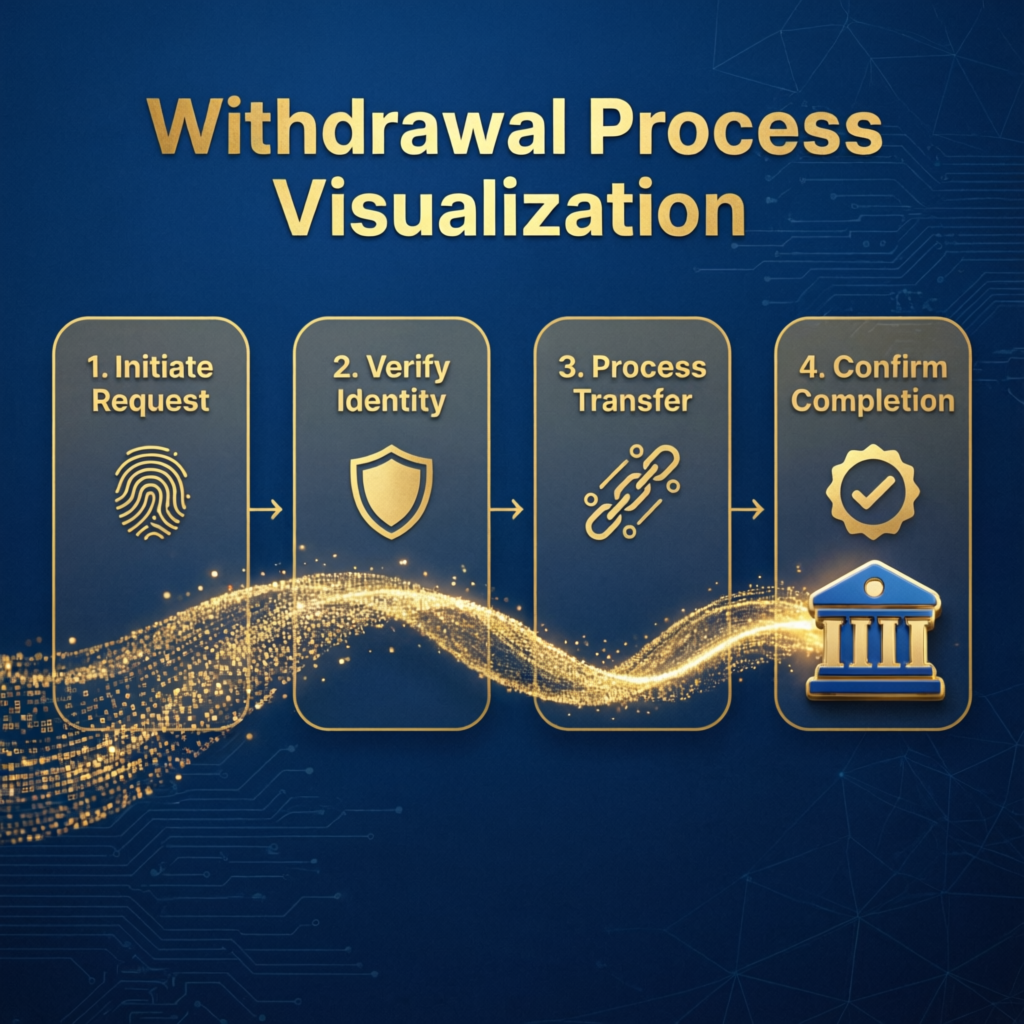
Here’s the step-by-step process for requesting and receiving your Apex payout:
Before submitting any payout request, verify: (1) 10+ trading days completed, (2) No single day exceeds 30% of profits, (3) Account above trailing drawdown, (4) No daily loss limit violations, (5) KYC documentation current, (6) Payout window is open.
Understanding the transition from evaluation account to Performance Account (PA) and the rules that govern funded trading.
A Performance Account (PA) is Apex’s term for a funded trading account. Once you pass the evaluation phase, pay the activation fee, and complete the onboarding process, you receive a PA account that allows you to trade with Apex’s capital and earn real payouts based on your performance.
One of the most attractive features of Apex Trader Funding is the ability to scale your account size as you demonstrate consistent profitability. Traders who maintain strong performance over multiple payout cycles can request larger account sizes, giving them access to more capital and higher profit potential.
Top-performing Apex traders can manage up to $3 million in combined account size across multiple PAs. Our funded account management service helps traders systematically scale from $50K to $300K+ accounts while maintaining compliance with all payout rules.
Learn from the mistakes of others. These are the most frequent reasons traders have their Apex payout requests denied.
Based on analysis of thousands of cases handled by our prop firm passing service team, here are the most common reasons Apex payout requests get denied — and exactly how to avoid each one:
A single trading day accounts for more than 30% of total profits. Solution: Trade more days to dilute large winning days.
Requesting payout before completing 10 minimum trading days. Solution: Track your trading days carefully.
Account equity falls below the trailing drawdown level. Solution: Use hard stop losses on every trade.
Exceeding the daily loss limit results in immediate account liquidation. Solution: Set daily loss alerts.
Submitting request outside the first 5 business days of the month. Solution: Set calendar reminders.
Identity verification not completed or expired documents. Solution: Keep KYC documents current.
Requesting payout when account shows net losses. Solution: Only request when clearly profitable.
Active warnings or violations on account. Solution: Review all rules before trading.
Operating multiple accounts in violation of terms. Solution: Follow Apex’s multi-account policies.
The #1 reason our clients come to us after a payout denial is the consistency rule. Traders make $5,000+ in profits but have one day that represents 40-50% of those profits. The solution? Our prop firm passing EA and management strategies ensure no single day exceeds 20% of total profits, giving you a safety buffer.
Battle-tested strategies from traders who’ve secured six-figure payouts from Apex Trader Funding.
Never let a single trading day exceed 20% of your total profits. This gives you a 10% buffer below Apex’s 30% consistency rule, protecting you from unexpected violations. If you’ve made $10,000 in profits, no single day should exceed $2,000.
Start with 25% of your maximum allowed contracts and scale up only after building a profit buffer. For example, on a $100K account allowing 10 contracts, start with 2-3 contracts until you’ve built $2,000+ in profits, then gradually increase position size.
Limit yourself to 2-3 high-quality trades per day. This approach:
High-impact news events (NFP, FOMC, CPI) can generate massive single-day profits that violate consistency rules. Our funded account management services recommend:
Don’t rush to request payouts. Wait until you have 15-20 trading days of data, which makes it mathematically easier to maintain consistency. The extra 5-10 days of trading often make the difference between an approved and denied payout request.
Choosing the right account size is critical for long-term success. Here’s our recommendation based on trader experience level:
| Experience Level | Recommended Size | Why |
|---|---|---|
| Beginner (0-1 years) | $25K – $50K | Lower pressure, easier to maintain consistency |
| Intermediate (1-3 years) | $50K – $100K | Balanced risk/reward, good profit potential |
| Advanced (3+ years) | $100K – $150K | Higher profits while maintaining control |
| Professional (5+ years) | $150K – $300K | Maximum capital for proven strategies |
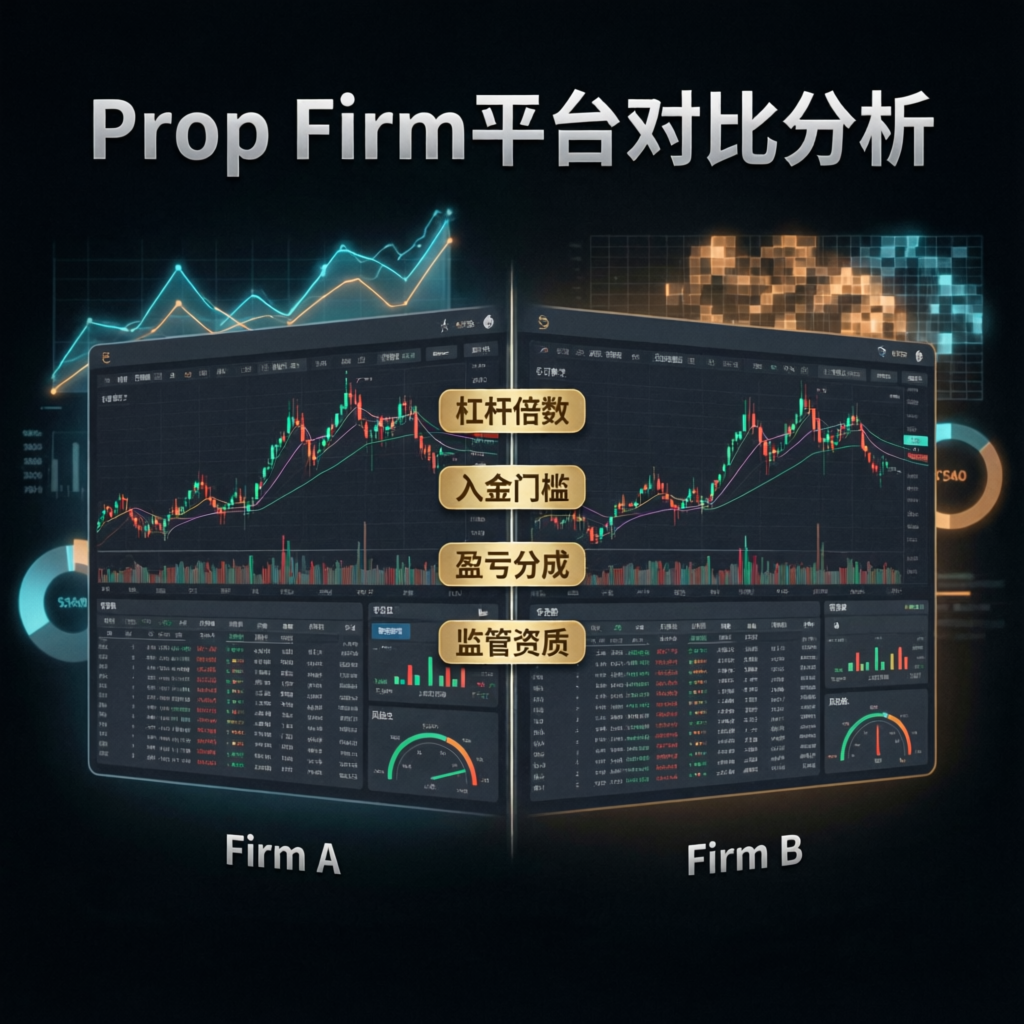
An honest comparison of Apex’s payout rules against Topstep, MyFundedFutures, Tradeify, and other major futures prop firms.
| Feature | Apex Trader Funding | Topstep | MyFundedFutures | Tradeify |
|---|---|---|---|---|
| Profit Split | 90-100% | 90% | 80-90% | 80-90% |
| Consistency Rule | 30% | None | None | None |
| Trailing Drawdown | Intraday | End-of-day | Intraday | Static |
| Evaluation Steps | 1 | 2 | 1 | 1 |
| Payout Frequency | Monthly | Bi-weekly | Monthly | Monthly |
| Min Trading Days | 10 | 5 | 10 | 10 |
| Starting Price | $49/mo | $165/mo | $65/mo | $75/mo |
| Max Account | $300K | $150K | $200K | $200K |
Apex is ideal for disciplined traders who can maintain consistency. If you struggle with the 30% rule, our prop firm passing service can help you pass Apex or recommend alternative firms with more lenient rules based on your trading style.
A complete roadmap from evaluation purchase to funded account payout, based on our 97% success rate methodology.
Don’t want to risk failing the evaluation? Our prop firm passing service has a 97% success rate passing Apex evaluations on behalf of clients. We handle the entire process while you focus on learning and growing as a trader. Contact us on Telegram to get started.
Join thousands of traders who’ve used our professional prop firm passing service to pass Apex evaluations and secure consistent payouts. 97% success rate. Money-back guarantee.
Futures trading involves substantial risk of loss and is not suitable for all investors. Past performance is not indicative of future results. The high degree of leverage can work against you as well as for you. Before deciding to trade futures, you should carefully consider your investment objectives, level of experience, and risk appetite. The possibility exists that you could sustain a loss of some or all of your initial investment and therefore you should not invest money that you cannot afford to lose. You should be aware of all the risks associated with futures trading and seek advice from an independent financial advisor if you have any doubts.
Pass My Prop Firms provides educational content and prop firm passing services. We do not provide financial advice, and all trading decisions are made at the client’s own risk. Results vary based on market conditions, trader skill, and adherence to prop firm rules.
Everything traders ask about Apex Trader Funding payouts, answered by our expert team.
Whether you want to pass Apex yourself with our guidance or let our professional traders handle it for you, we’re here to help you secure consistent payouts.